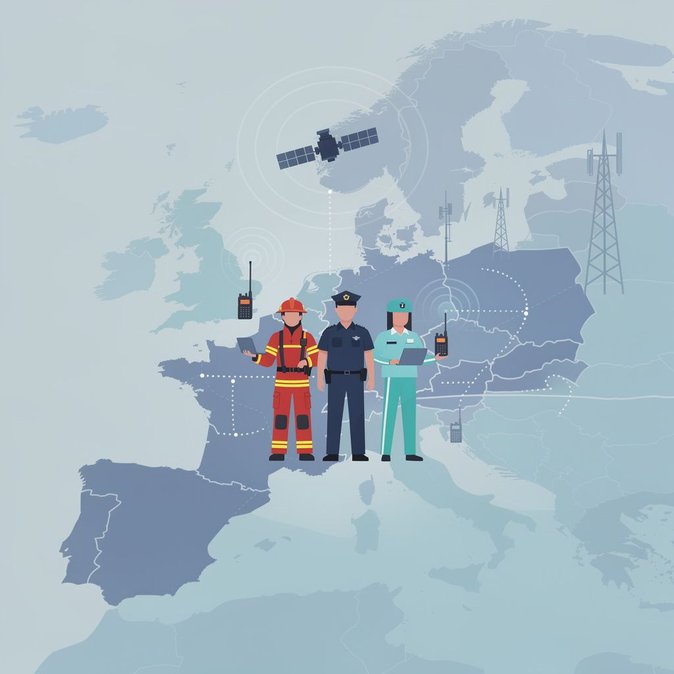
Citing dramatic examples from this summer’s High Fens wildfire on the Belgian-German frontier, the European Commission has unveiled plans for an EU-wide ‘Critical Communication System’ that would let police, firefighters and medical teams stay connected when operations spill across borders. The proposal, published on Wednesday, would migrate national emergency networks from narrow-band radio to interoperable 5G broadband linked to the EU’s new Iris² satellite constellation. During the High Fens blaze, Belgian crews lost radio contact once they crossed into Germany to coordinate water-bomber flights, forcing commanders to rely on personal phones with patchy coverage. A similar communications blackout hampered a cross-border police chase near Maastricht when Dutch officers could not directly alert their Belgian counterparts in Liège. Brussels argues such gaps threaten public safety and, by extension, the free movement of people and goods that underpins the single market. Under the blueprint, each member state would upgrade its public-safety network but connect through a central EU hub responsible for cybersecurity monitoring and interoperability standards. Military units could piggy-back on the system, raising the strategic profile of Europe’s telecom equipment makers; Airbus, Leonardo and Frequentis have already taken part in pilot projects. If approved by the Council and European Parliament, rollout would start in 2029 with full operational capability targeted for 2036. For employers managing multinational field teams – from pipeline inspectors to event-security contractors – the scheme promises seamless push-to-talk and data services across borders, reducing the need for cumbersome local SIM cards or rental radios. Belgium’s Interior Ministry welcomed the proposal, noting that its planned replacement of the ageing ASTRID network aligns with the EU timeline. Pending funding decisions, procurement guidelines should clarify whether devices certified in one country will auto-roam in another – a key concern for logistics firms that move staff and cargo trucks through Belgium’s busy transit corridors.
Source: Euronews