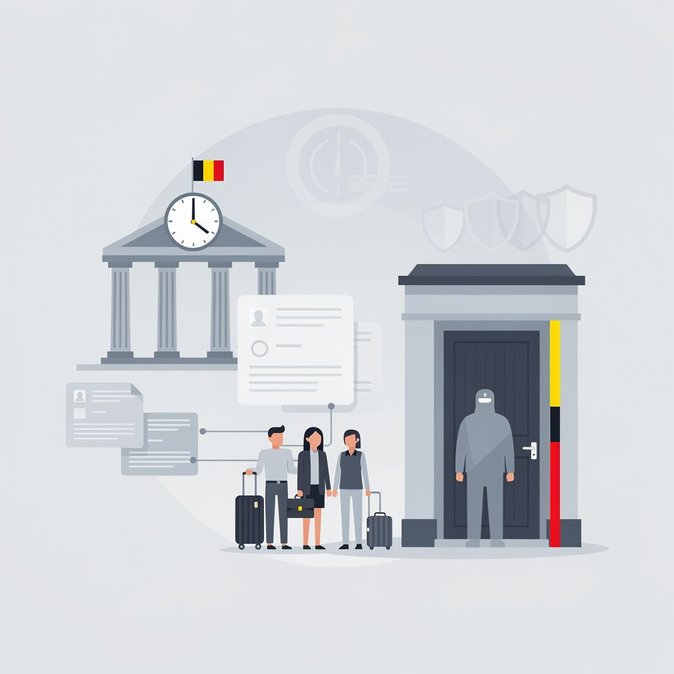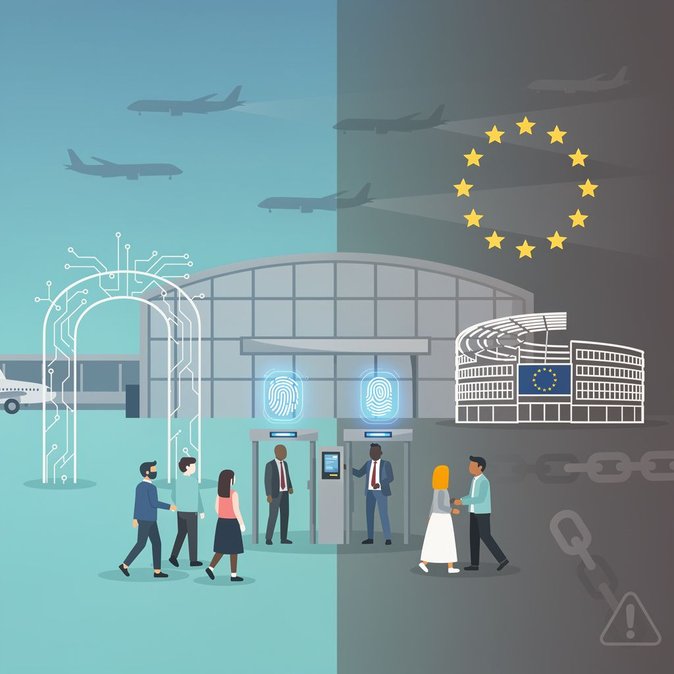
EU home-affairs ministers – including Belgium’s Deputy Prime Minister and Migration Minister Anneleen Van Bossuyt – met in Luxembourg on 1 October to launch a two-day Justice and Home Affairs (JHA) Council focused on tightening control of the EU’s external borders and accelerating deportations of irregular migrants. The agenda puts the still-new Migration & Asylum Pact, in force since 12 June 2026, at the centre of the discussion, alongside calls from the European Commission to significantly expand the EU border agency Frontex’s budget and mandate. For Belgium, which will take over the rotating EU Council presidency in January 2027, the meeting is a dress rehearsal for shepherding sensitive Schengen files. Brussels has already committed additional federal-police resources to implement the Entry/Exit System (EES) at Zaventem Airport and land borders, yet continues to face long queues and criticism from airlines. A stronger, better-staffed Frontex would, Belgian officials argue, reduce pressure on member-state personnel and make external-border data more reliable. Ministers also examined ways to boost the EU’s ‘return rate’ – the share of people with a final removal order who are actually repatriated. Belgium’s delegation backed a proposal to create EU-level “return hubs” in partner countries and to link visa-policy carrots and sticks to cooperation on readmission. The discussion dovetails with a controversial Belgian domestic bill that would allow limited home-entry to detain absconding migrants (see separate story). Technical briefings from the Commission and EU-LISA highlighted lingering interoperability gaps between large-scale databases such as EES, ETIAS and EURODAC. Belgium urged that lessons from the glitches at Brussels Airport be factored into the 2027 deployment of the European Travel Information and Authorisation System so that business-travel bottlenecks are not repeated. In the margins, Belgium pressed for a Schengen-wide early-warning mechanism that would let border-control authorities see real-time passenger flows, enabling airports like Brussels to scale staffing dynamically. If endorsed, the measure could materially improve queue times for multinational assignees and frequent flyers using Belgium as their EU gateway.
Source: Associated Press