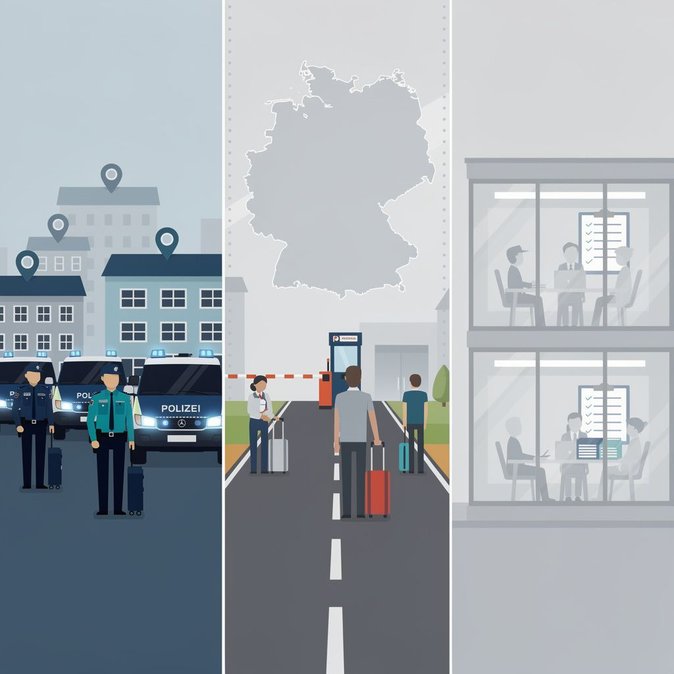
In one of the largest anti-smuggling operations Germany has mounted in years, more than 2,200 officers from the Federal Police (BPOL) and the Customs Financial Control of Undeclared Work (FKS) swept through eight federal states on 30 September 2026. Apartments, hostels, offices and hotels in Berlin, Hamburg, Thuringia, Saxony, Saxony-Anhalt, Hesse, North-Rhine–Westphalia and Baden-Württemberg were searched simultaneously. Investigators executed multiple arrest warrants against suspected ringleaders who, according to prosecutors, had earned millions of euros by transporting migrants across Germany’s eastern borders and supplying them with forged documents. Prosecutors in Berlin said the network advertised its services on social media channels popular in the Western Balkans, promising “safe and fast” entry into the Schengen Area for fees of up to €8,000 per person. Once in Germany, migrants were allegedly placed in overcrowded accommodation and funnelled into illegal labour. Authorities seized large quantities of cash, smartphones, luxury vehicles and stacks of counterfeit passports during Wednesday’s raids. The operation illustrates the German government’s determination to curb irregular migration at a time when asylum numbers are again rising. Interior Minister Alexander Dobrindt praised officers for “striking at the logistical heart” of organised smuggling and said the evidence gathered would bolster Berlin’s request to prolong temporary controls at Germany’s land borders with Poland and the Czech Republic. Business travellers should expect more frequent ID checks on incoming trains and motorways over the coming weeks. For global mobility managers, the case is a reminder that German authorities scrutinise corporate housing and staffing arrangements for signs of illegal employment. Companies hosting expatriates are advised to keep tenancy agreements, payroll records and copies of residence permits readily available in case of spot inspections. While legitimate assignees are unlikely to be targeted, they could experience delays if living in properties implicated in ongoing investigations. Industry observers note that the scale of the joint BPOL–FKS action would have been impossible without the new inter-agency data-sharing powers introduced in Germany’s 2025 Anti-Smuggling Act. These powers allow customs, police and immigration databases to be cross-referenced in real time—a capability the interior ministry now plans to extend to other EU partners under the Prüm II framework.