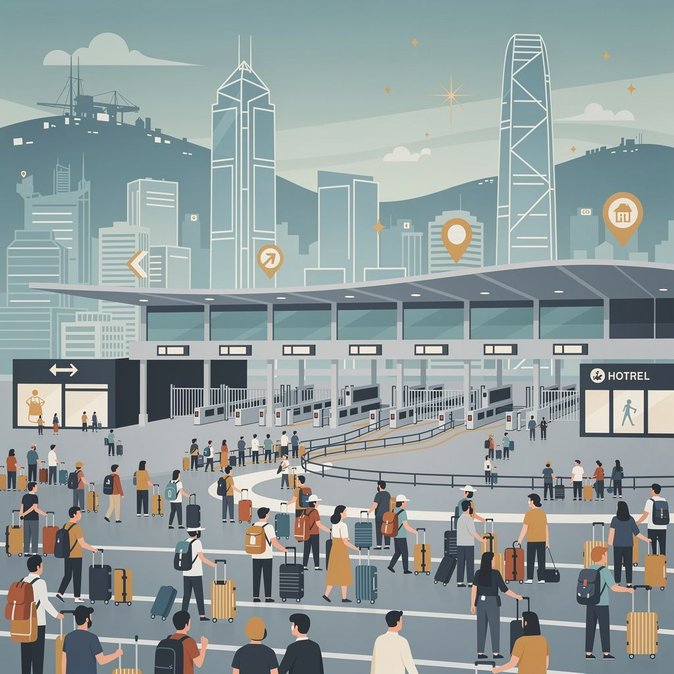
Hong Kong’s control points went into peak-season mode on Thursday as the National Day "golden week" holiday began. The Immigration Department reported that by 4 p.m. on October 1 a total of 601,000 passenger movements had already been processed at land, sea and air checkpoints. Of these, 347,000 were arrivals and 253,000 were departures. Mainland visitors accounted for roughly 225,000 of the arrivals, with West Kowloon station handling the single-largest share. The traffic surge is in line with official projections that about 1.29 million mainland residents will visit between October 1 and 7. To cope, the department has deployed additional e-Channel lanes and roving staff at high-pressure ports such as West Kowloon, Lo Wu and the Hong Kong-Zhuhai-Macao Bridge. Queuing times at major land crossings averaged 15–20 minutes on Thursday morning, according to real-time data displayed in the “Go Hong Kong” mobile app. For businesses the numbers matter. Retail groups estimate that every percentage-point increase in same-day mainland arrivals lifts total sales by HK$70-80 million (US$9-10 million). Jewellery chains have extended opening hours, while ride-hailing platforms have added surge-cap controls to prevent price spikes that might deter spending-minded visitors. Corporate mobility managers should note that freight forwarders are warning of potential delays for hand-carry shipments, especially at the airport, where passenger traffic is expected to spike after the October 3 over-stay window. Firms sending employees out of Hong Kong during the holiday are being advised to build in extra transfer time and make use of automated passport gates wherever possible. From a policy perspective, the smooth throughput on Day 1 will be watched closely by Beijing as an indicator of Hong Kong’s readiness to host larger-scale events ahead of the city’s "Hello Hong Kong 2.0" tourism relaunch campaign scheduled for December.
Source: RTHK