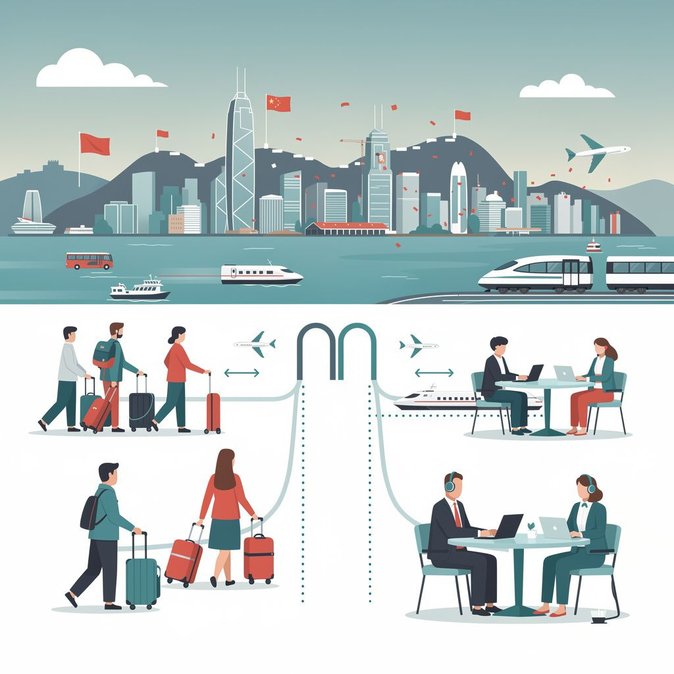
As of 4 p.m. on 1 October, Immigration Department counters showed 225,261 mainland Chinese entries into Hong Kong and 192,000 outbound departures by local residents, South China Morning Post reported. The two-way traffic jammed both sides of the Lok Ma Chau Spur Line Control Point, where footbridges saw pedestrian density reach 1.8 people per square metre—close to the design threshold. Travel agency bosses said many Hongkongers were heading to Shenzhen for outlet shopping and 60 centimetre-long ‘king-size’ egg tarts that have gone viral on social media. Conversely, inbound tour groups queued for photo ops in front of the city’s first post-pandemic National Day fireworks barge now anchored in Victoria Harbour. For companies, the data suggest that staff who live in Shenzhen but work in Hong Kong could face extended Monday-morning queues when returning after weekend shopping trips. Some firms are allowing remote work on 4 October or providing hotel rooms in Kowloon to critical employees. The MTR Corporation kept East Rail Line trains at 2.5-minute intervals during the afternoon peak and added platform marshals at Lo Wu to maintain orderly boarding. Cross-boundary bus operators also deployed 80 extra vehicles, but congestion at Huanggang Port still resulted in 25-minute delays. Economists note that the twin flows illustrate the ‘one-hour living circle’ dynamic of the Greater Bay Area, with implications for retail spending patterns, labour mobility and residential property choices on both sides of the border.
Source: South China Morning Post