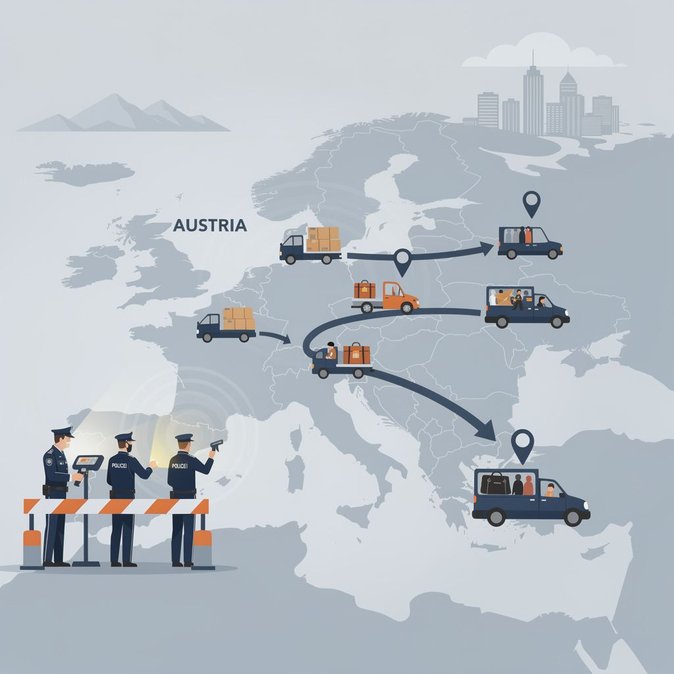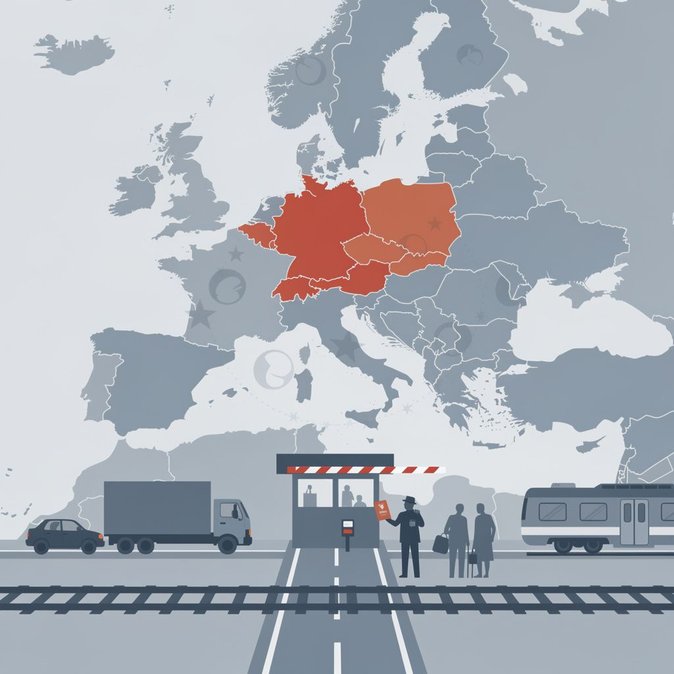
Business travelers heading to or through Austria will continue to face passport checks at the country’s land borders for at least another five and a half months. An updated notification posted by the European Commission on 4 October confirms that Vienna has prolonged its temporary re-introduction of internal Schengen controls until 15 March 2027. Austria cites “continuous threats to internal security posed by irregular migration,” pressure on asylum reception facilities, and broader geopolitical instability—including Russia’s war on Ukraine and tensions in the Middle East—as grounds for the measure. The controls apply to Austria’s frontiers with Germany, Czechia, Slovakia, Hungary and Slovenia. Although spot checks remain the norm rather than systematic screening, travellers should budget extra time—particularly commercial drivers, cross-border commuters and corporate assignees moving household goods—because queues can form during peak periods. According to the Schengen Borders Code, such “exceptional” controls must be proportional and regularly reviewed, but Austria has kept some form of border check in place almost continuously since 2015. For employers relocating staff, the extension means that EU nationals who would normally travel with only an ID card should carry a passport to simplify procedures, and that posted workers may be asked for assignment documentation. Logistics firms operating just-in-time supply chains should monitor waiting-time dashboards provided by Austrian and German road authorities and adjust delivery schedules accordingly. On the compliance side, companies must remember that the temporary measure does not affect underlying free-movement rights: EU citizens can still enter, work and reside in Austria without a visa. However, failure to show acceptable ID at the border can lead to denial of entry or administrative fines. Third-country nationals with residence permits issued by another EU state should carry both their passport and permit to avoid secondary inspection. Looking ahead, Austrian officials have given no indication that the checks will be lifted early. The European Parliament and Council are still negotiating reforms to the Schengen Borders Code that would set stricter limits on the duration of such controls. Until those talks conclude, businesses should treat Austria’s land borders as de-facto external borders when planning itineraries and supply chains.