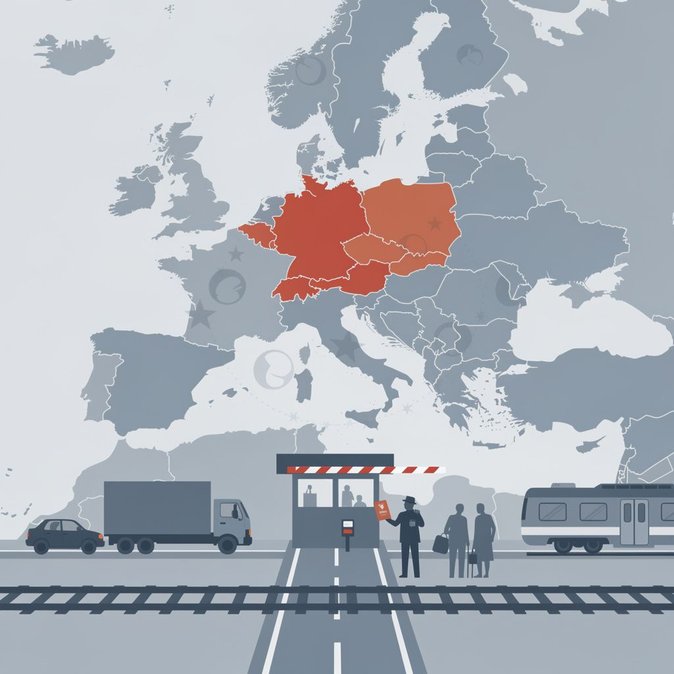
The Austrian Interior Ministry (BMI) quietly published new guidance this morning clarifying that Ukrainian men who are subject to conscription at home will no longer automatically qualify for the EU’s Temporary Protection Directive when they arrive in Austria. The measure, which took effect for new arrivals in early August but was formally communicated on 4 October, brings Vienna into line with a consensus reached by Germany, Poland and the Czech Republic at the Justice and Home Affairs Council. Under the revised Vertriebenen-Verordnung, male Ukrainian nationals aged 18-60 must prove that they have fulfilled – or are exempt from – their military obligations before they can obtain an Austrian residence permit for displaced persons. Existing beneficiaries keep their status until 4 March 2028, but newcomers face an additional documentation hurdle at the border and at immigration offices. BMI argues the move helps Ukraine by preventing ‘defence-relevant cohorts’ from leaving the country and reduces pressure on Austria’s reception capacity. For employers, especially in hospitality and IT outsourcing, the impact could be immediate. Since March 2022 roughly 15 % of Ukrainians who took up jobs in Austria were men in the targeted age group. Without protection status, they must secure a regular work visa – often the Red-White-Red Card – before they can be hired. Labour lawyers report a spike in enquiries from firms looking to convert temporary-protection holders into regular employees before renewal deadlines. Human-rights NGOs have criticised the policy, noting that conscription status can be difficult to prove amid wartime bureaucracy. The ministry counters that humanitarian exemptions remain possible and that an ‘exit ramp’ has been created: displaced persons may switch to a Niederlassungs- und Aufenthaltsgesetz (NAG) permit without falling into illegality during the processing gap. Companies with Ukrainian assignees are advised to audit staff status immediately and, where necessary, prepare Red-White-Red Card applications well ahead of project start dates. Travellers sponsoring family members should also check the new rules: dual protection in more than one EU state is now explicitly forbidden, closing a loophole some mobile workers had used to access benefits in Austria while living elsewhere.