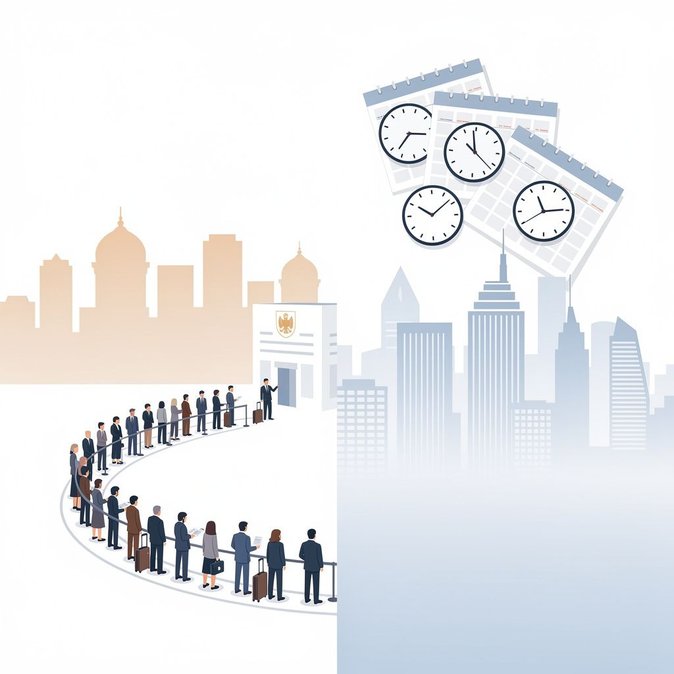
Updated State Department statistics scraped on October 3 reveal that applicants for B-1/B-2 visitor visas at the U.S. Embassy in New Delhi face waits of up to 10 months for the next interview slot, while student and exchange categories hover around two months. Petition-based H-1B and L-1 workers fare slightly better at three months, but that remains a significant hurdle for India-based assignees heading to U.S. client sites. The New Delhi numbers mirror a broader post-pandemic crunch: worldwide, 45 percent of consulates still report visitor-visa waits exceeding six months. Despite an aggressive hiring drive, the Bureau of Consular Affairs says staffing levels in India are only 86 percent of pre-COVID strength. For U.S. companies dependent on Indian talent, the persistent delays complicate project-start dates and sales trips. Some firms now route travelers through third-country posts like Singapore or Bangkok, which show much shorter queues but add airfare and hotel costs. Others have shifted to remote-first project models or increased use of the ESTA-like B-1 in Lieu of H policy for short-term work, though that carries compliance risks. Mobility managers should set realistic expectations: a fall-2026 filing may not yield a U.S. arrival until summer 2027 for standard visitors. Premium-processing upgrades at USCIS do not bypass consular bottlenecks, and “drop-box” renewals remain suspended for most employment-based visas. The embassy plans a “Super Saturday” interview drive later this month, targeting 10,000 slots, but experts caution that the event will barely dent the backlog. Travelers should monitor appointment portals daily and use the “refresh” strategy to capture cancellations.