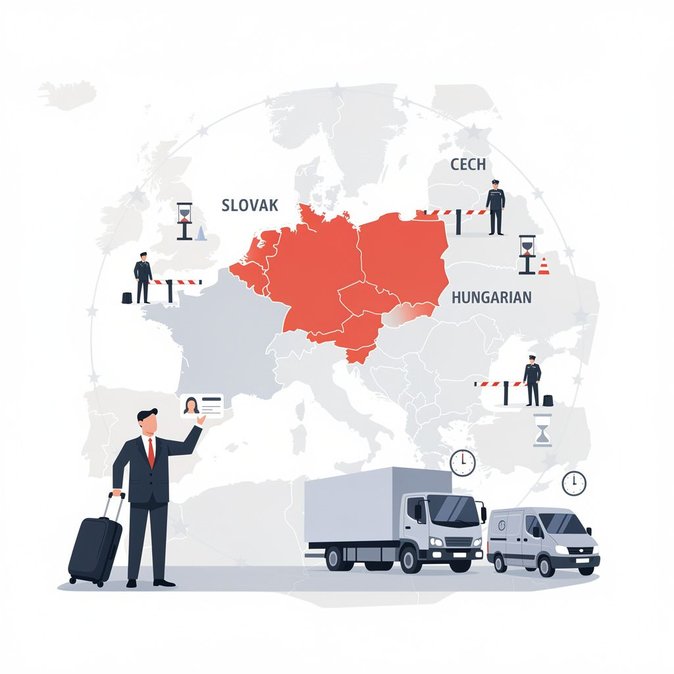
A pan-European briefing released on 7 October by immigration firm Fragomen confirms that Austria, along with France, Germany, Poland and Sweden, is maintaining internal Schengen border controls until at least March-May 2027. Vienna has already notified the European Commission of its latest six-month prolongation covering land frontiers with Slovakia, Czechia, Hungary and Slovenia, citing irregular-migration pressure and the security implications of Russia’s war against Ukraine and Middle-East instability. While the amended Schengen Border Code of 2024 discourages long-term internal checks, it still permits extensions in renewable six-month blocks where “persistent threats” exist. Austria has relied on this clause almost continuously since 2015. The continuation means travellers crossing by road or rail should keep passports or national ID cards ready and expect spot checks that can create delays, especially for freight. For business mobility managers the key is predictability: workers on short-term assignments must factor wait times into itineraries, and companies should remind visa-exempt staff that Schengen’s 90/180-day rule continues to apply even when an ID has been stamped during an internal check. Carriers need to verify that drivers’ daily rest periods account for potential border queues to avoid infringement fines. From a policy perspective, Austria is lobbying EU partners to couple the new Screening and Eurodac regulations with tougher return arrangements for rejected asylum seekers before fully lifting internal checks. The issue will feature prominently at the Justice and Home Affairs Council later this month. The updated Fragomen alert links directly to the Commission’s live database of notifications; however, practitioners note that the EU portal can lag by several days, so relying on member-state gazettes—as Austrian logistics associations now do—remains best practice.
Source: Fragomen Immigration Alert