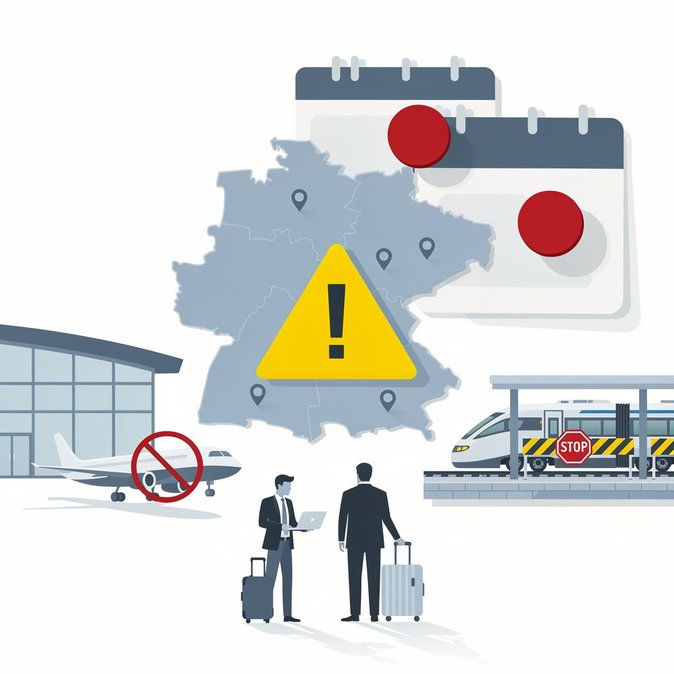
The UK Foreign, Commonwealth & Development Office (FCDO) has updated its travel advice for Belgium, elevating the risk level around nationwide industrial action planned for 9 October and a follow-up strike on 12 October. The advisory, revised on 7 October and still current on 8 October, highlights probable disruption across public transport, public services and air travel, noting that “flights have been cancelled at Brussels Airport on 9 October.” Although the FCDO guidance is aimed at British nationals, it is widely referenced by multinational companies when assessing travel risk. The updated advisory underscores that demonstrations will take place in central Brussels and could trigger ad-hoc road closures and a heavier police presence. Travellers are urged to monitor local media, confirm itineraries with service providers and allow additional time for journeys. For global-mobility professionals, the significance lies in compliance and duty-of-care obligations. Employers sending staff from the UK (or any location) into Belgium during the strike period should document that travellers were informed of the heightened risk and provided with contingency options. Failure to do so may expose firms to reputational and, in some jurisdictions, legal risk. The FCDO update also serves as a reminder that national strikes in Belgium often ripple beyond one day: unions sometimes stage rolling actions across sectors, and rescheduling meetings to adjacent days may not fully avoid disruption. Organisations with time-critical projects should evaluate the feasibility of remote participation or re-routing through Amsterdam or Paris, bearing in mind that French and Dutch rail operators can themselves be affected by Belgian labour unrest. While the FCDO stops short of advising against travel, the language of the alert—combined with airport and public-transport warnings—makes it clear that “business as usual” cannot be assumed on 9 October. Travel managers should therefore ensure that traveller tracking systems and emergency-communication protocols are fully operational before the strike begins.