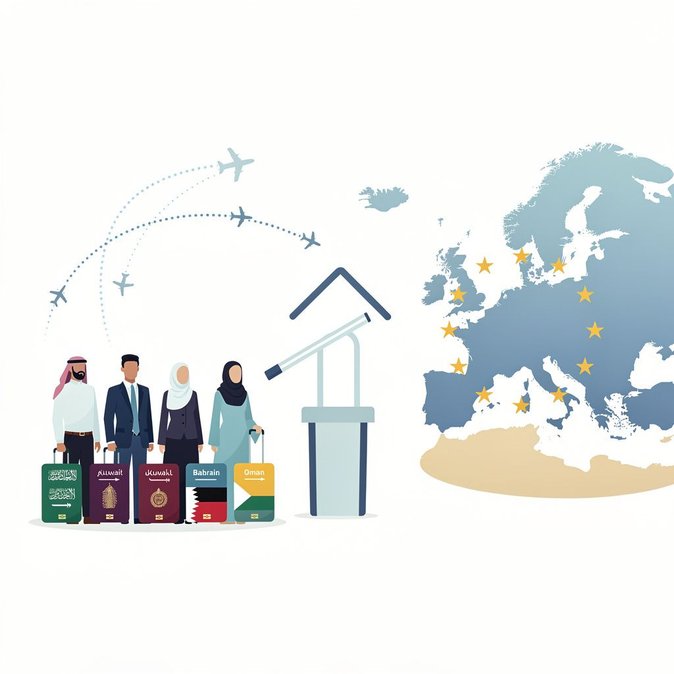
The prospect of seamless business travel between the Gulf and Europe took a significant step forward on 9 October when Gulf Co-operation Council secretary-general Jasem Al-Budaiwi told a regional podcast that the EU is on the brink of formally launching a visa-waiver process for GCC nationals. Although Emiratis already enjoy 90-day visa-free entry to the Schengen Area, the remaining five GCC states—Saudi Arabia, Qatar, Kuwait, Bahrain and Oman—still require visas that can take weeks to secure. Al-Budaiwi said negotiators hope to announce the start of the waiver procedure at the EU-GCC summit in Riyadh on 24 October, calling the breakthrough “very close”. For UAE-based multinationals the move would be transformational. Today, regional project teams must juggle multiple passports, invitation letters and appointment backlogs when assembling cross-border work crews for Europe. Once the waiver is in force, GCC staff could join Emirati colleagues on the same approval-free trips, streamlining project mobilisation and cutting compliance costs across construction, energy and professional-services sectors. The secretary-general stressed that each Gulf state will still undergo its own technical assessment—covering passport security, border-control systems and data-protection laws—so implementation timelines may differ. However, EU officials have already praised the GCC’s biometric e-passport roll-out and its robust API/PNR data-sharing, giving businesses confidence that the process will stay on track. Companies are advised to audit current Schengen-visa inventories, review assignment policies and update travel-risk assessments so they can pivot quickly once individual waivers are signed. Immigration advisers also warn that the scheme, like the UAE’s existing exemption, will cover only short-stay visits; assignees who need to work in the EU still require the relevant national permits.
Source: Trends MENA