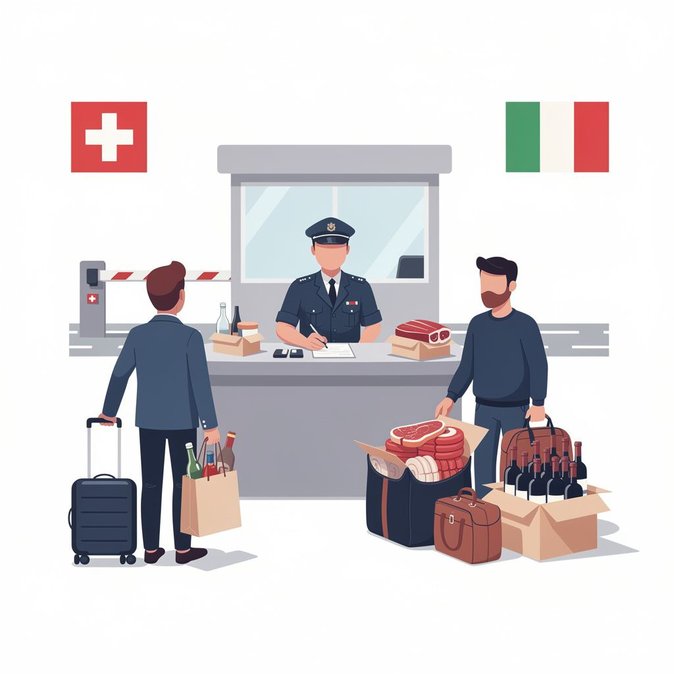
Swiss customs officers in the Mendrisiotto district intercepted two significant consignments of undeclared foodstuffs this week, the Federal Office for Customs and Border Security (FOCBS) confirmed on 9 October. In Vacallo on 3 October, a vehicle with Swiss plates carrying three Romanian passengers was found with 82 kilograms of Italian-purchased meat. The travellers declined on-the-spot clearance, left Switzerland, but were stopped again hours later—still carrying the meat—and ultimately had to pay two fines and duties. Four days later, a mobile patrol in Stabio inspected a Swiss-registered van holding 492 bottles of Italian wine destined for a private event in German-speaking Switzerland. The Swiss driver had not completed a customs declaration and was similarly fined after officers collected import duties. Although the quantities fall outside personal-use duty-free allowances, the cases illustrate FOCBS’s escalating mobile-check strategy around Ticino’s secondary crossings, popular with cross-border shoppers and frontaliers. The agency has warned that leaving the country immediately after inspection does not nullify an offence if goods re-enter Swiss territory undeclared. For frequent business travellers and expatriates shuttling between Switzerland and Italy, the incidents serve as a cautionary tale: customs officers are imposing penalties even on private-use imports when quantitative limits are exceeded or declarations omitted. Corporations running staff shuttles or organising corporate events should brief employees on current allowances—1 kg of meat and 5 litres of wine (up to 15% ABV) remain duty-free per person per day—and ensure that drivers of company vehicles carry commercial invoices when transporting supplies. Failure to comply can lead to cumulative fines, back-taxes and, in repeated cases, vehicle confiscation. The FOCBS is expected to intensify checks in the run-up to year-end festivities, when bulk grocery runs across the Italian border traditionally spike.
Source: Frontaliere Ticino