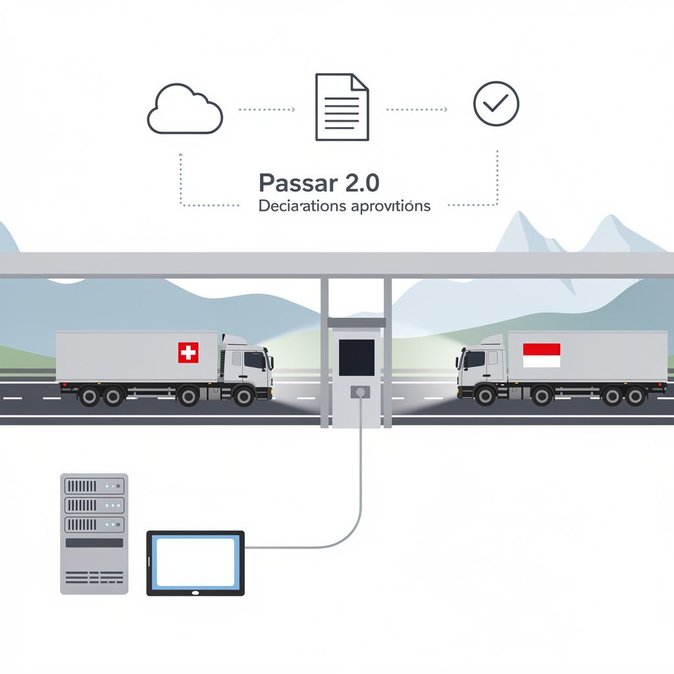
Switzerland’s Federal Office for Customs and Border Security (FOCBS) has quietly published a set of documents dated 8 October 2026 that map out the next—and most comprehensive—phase of its “Smart Border Austria” programme. The package affects the busy St. Gallen/Liechtenstein corridor and all commercial crossings along the Rhine Valley, a route that handles thousands of consignments a day for the export-heavy machinery, life-sciences and luxury-goods clusters of Eastern Switzerland. At the core of the reform is the switchover to Passar 2.0, the fully digital customs processing platform that allows hauliers and freight forwarders to pre-declare goods and receive automated clearance decisions before trucks even reach the frontier. From 1 October 2026, the Diepoldsau, Kriessern and Oberriet posts will no longer be physically staffed; companies that still require a face-to-face counter transaction must divert to Schaanwald, Au or St. Margrethen. Annexes published the same day spell out separate import, export and emergency workflows, including what happens if the IT system goes down. Although the documents are available only in German, the practical implications are clear. Firms that have already integrated their ERP systems with Passar can shave an estimated 20–30 minutes off each crossing, while first-time users will need to invest in software interfaces and driver training. The FOCBS warns that spot checks can be carried out at any time and that non-compliant operators risk being rerouted or fined. For business travellers and commuters the changes are less dramatic, but still visible. Signage at the smaller crossings will redirect private vehicles during peak freight windows, and local chambers of commerce are advising employees to carry digital copies of work contracts to speed up any ad-hoc inspections. Logistic associations welcomed the announcement, noting that Austria is rolling out a mirror “Smart Border” module, reducing asymmetry on the other side. In the medium term, customs modernisation dovetails with Switzerland’s broader ‘Digital Border’ agenda, which also includes biometric Entry/Exit registration at airports and a 2028 target date for EU-wide digital Schengen visas. Taken together, these steps will make Switzerland’s eastern border one of the most data-driven in Europe—good news for supply-chain planners, but a wake-up call for companies that still rely on paper carnets.
How VisaHQ can help
VisaHQ simplifies the visa application process for individuals and businesses. Check current travel requirements, prepare the required documents and manage your application online through the VisaHQ Switzerland portal.More From Switzerland
View all
Parliament approves AIG amendment giving protection-status holders and foreign graduates easier access to Swiss labour market
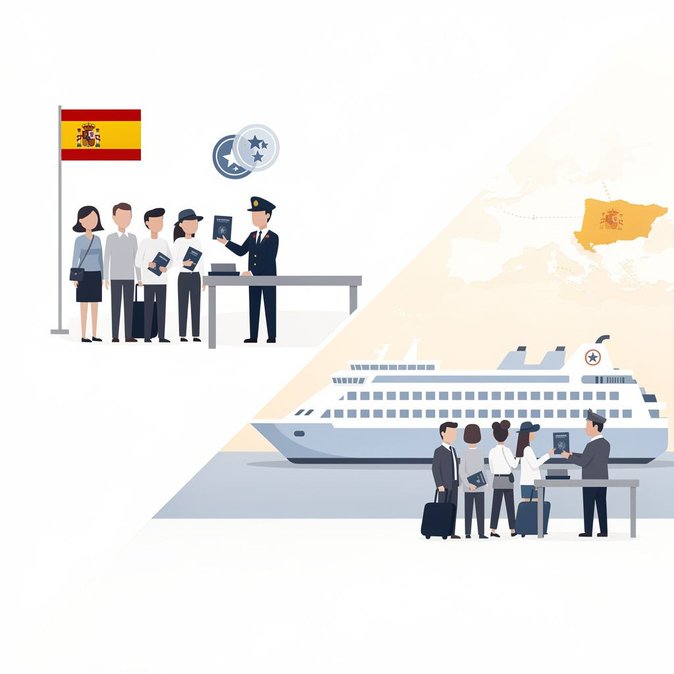
Spain reinstates Schengen border checks—Swiss business travellers transiting Iberian hubs advised to allow extra time