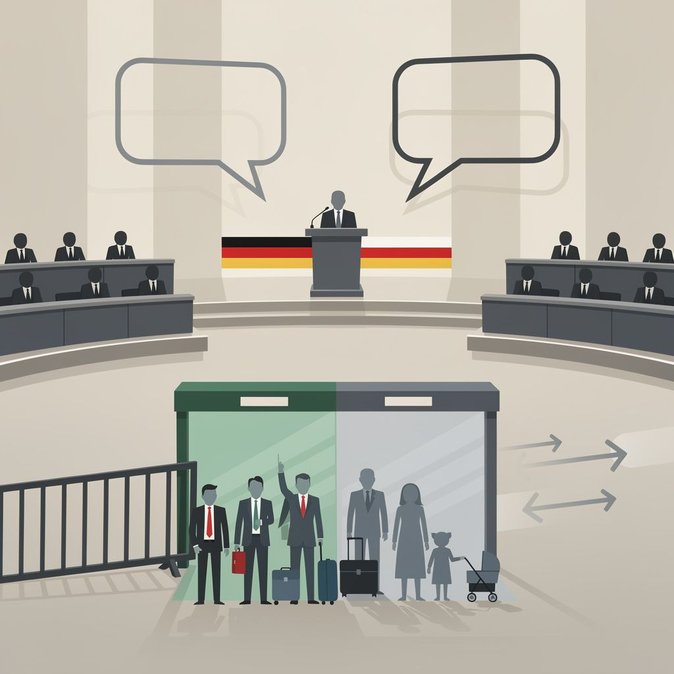
Germany’s Bundestag devoted the first hour of its 9 October 2026 sitting to an unusually heated first reading of an opposition motion entitled “Measures for a real migration turnaround”, tabled by the far-right Alternative für Deutschland (AfD) party. AfD spokesman Dr Gottfried Curio painted a picture of uncontrolled immigration and demanded that “two- to three-hundred thousand illegals” be deported annually. The motion calls for an end to automatic naturalisation after eight years, a suspension of almost all family-reunification visas for people with subsidiary protection, and a visa-ban on labour and training migration from states that refuse to take back rejected citizens. Government and mainstream opposition parties replied in force. CDU/CSU MP Detlef Seif argued that the coalition has already delivered a “migration turnaround” by sharply reducing asylum applications, while Green MP Filiz Polat lauded Germany’s diversity as an economic strength. SPD speaker Hakan Demir accused the AfD of spreading “right-wing extremist deportation fantasies”, stressing that millions of employees with a migration background keep essential sectors running. Although the AfD motion has no chance of passing in its current form, the debate matters for corporate mobility managers: it keeps visa restrictions, family-reunification rules and border enforcement at the top of the political agenda. Any tightening—whether adopted piecemeal or under a future conservative government—could complicate talent planning, especially for third-country nationals whose spouses or children still await entry permits. The AfD also urges the deployment of drones and AI at airports and land borders, signalling pressure for more intrusive traveller screening technologies. Procedurally, the motion was referred to the Internal Affairs Committee, where hearings with business groups and migration experts are expected later this autumn. Companies with large non-EU workforces should monitor the committee stage: amendments sometimes find their way into broader legislative packages or coalition compromises. For now, the debate underlines Germany’s shifting political centre of gravity—any future grand coalition between CDU/CSU and AfD at state or federal level would likely translate today’s rhetoric into tomorrow’s policy. In the meantime, HR departments are advised to brief international employees on the political climate, prepare contingency plans for slower family-reunification visa issuance, and engage with industry associations that lobby for predictable, business-friendly immigration rules.
Source: Deutscher Bundestag