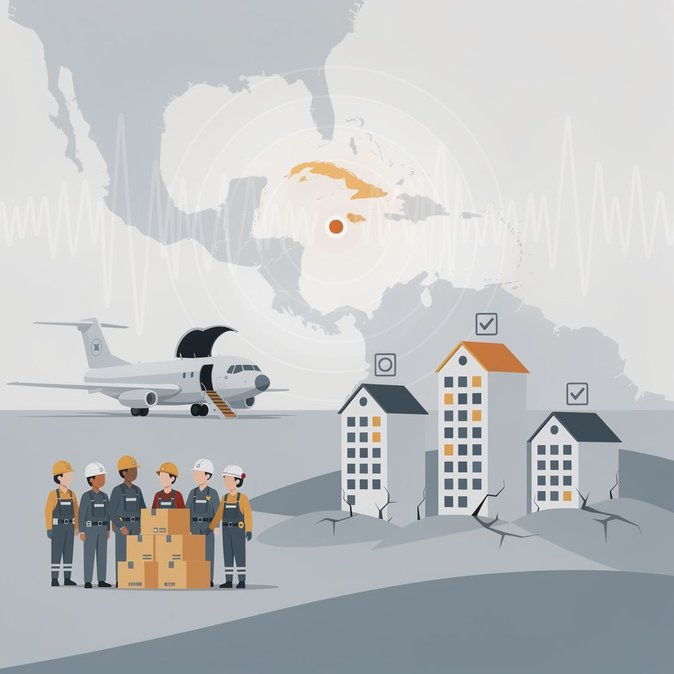
In a fact sheet issued at 10:56 a.m. Pacific on October 10, the U.S. Department of State detailed its rapid response to the 7.7-magnitude earthquake that struck Panama the previous day. A Disaster Assistance Response Team (DART) and two 10-member Urban Search and Rescue (USAR) units arrived in Panama City within 24 hours, while SOUTHCOM provided aerial reconnaissance under the bilateral security-co-operation framework. The U.S. also authorized Panama’s Air and Naval Service to deploy two State-funded helicopters for relief missions and pledged US $5 million in humanitarian aid. For global mobility managers, the announcement is a green light to resume—but carefully monitor—planned business travel and relocation projects in Panama’s capital region. The U.S. Embassy reports no American casualties, but encourages citizens to enroll in the Smart Traveler Enrollment Program (STEP) and to heed local safety advisories as aftershocks continue. Companies with expatriates in Panama should review evacuation insurance clauses; most exclude acts of nature unless supplemental riders are in place. Infrastructure impact appears limited to older buildings in the Azuero Peninsula and parts of Coclé, areas where many multinational firms maintain agribusiness and mining operations. Housing-quality inspections are under way. International schools in Panama City plan to reopen October 13, but corporate relocation firms advise checking for structural-safety certificates before sending children back to class. The speed of the U.S. response reflects lessons learned from recent Caribbean quakes: pre-positioned assets and standing MOUs make it easier to support host governments. Mobility teams should capture these lessons by identifying local partners capable of rapid damage assessment and by ensuring that emergency-contact rosters include both embassy and corporate hotlines. Key takeaway: while Panama’s investment climate remains attractive, the quake underscores the importance of dual-location contingency planning in seismically active Latin American markets.