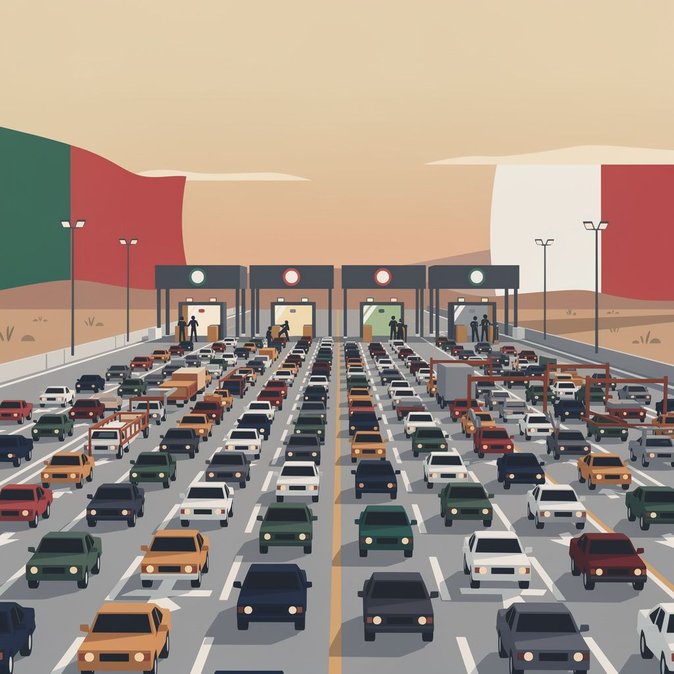
Real-time data from analytics platform Border Times show northbound vehicle queues at San Ysidro topping 150 minutes on October 11, the longest holiday delay since pre-pandemic 2019. Otay Mesa (170 minutes) and Calexico West (90 minutes) also reported multi-hour waits, while pedestrian lanes held steady at 5–20 minutes. The spike coincides with the extended Columbus Day/Día de la Raza weekend, when cross-border shoppers and visiting relatives converge with commercial traffic. Why it matters: for maquiladora managers and U.S. retailers, the holiday gridlock can translate into late shift starts, production downtime and missed just-in-time delivery windows. Border Times’ sensor network counted 82,000 vehicles at San Ysidro by midday Sunday—roughly 30 percent above the weekday average. Ready Lane and SENTRI trusted-traveler programs did little to alleviate waits because only 10 of 34 Ready lanes and 14 of 34 SENTRI lanes were staffed, reflecting CBP’s ongoing staffing shortage. Action steps for mobility stakeholders: • Advise cross-border commuters to depart before 6 a.m. or after 8 p.m., when historical data show the lowest waits. • For corporate shuttle programs, preload traveler manifests into the CBP Border Wait Time API to identify real-time lane shifts. • Update assignment cost models—overtime payments for delays averaged US $45 per employee last Columbus Day according to the Border Commerce & Security Council. Long-term outlook: CBP’s FY 2027 budget requests funds for 300 additional officers in the San Diego sector, but hiring has lagged. Companies with significant cross-border staffing should continue to expand remote-work pilots and review Section 321 de-minimis shipment options to reduce same-day crossings for parts procurement.
Source: Border Times