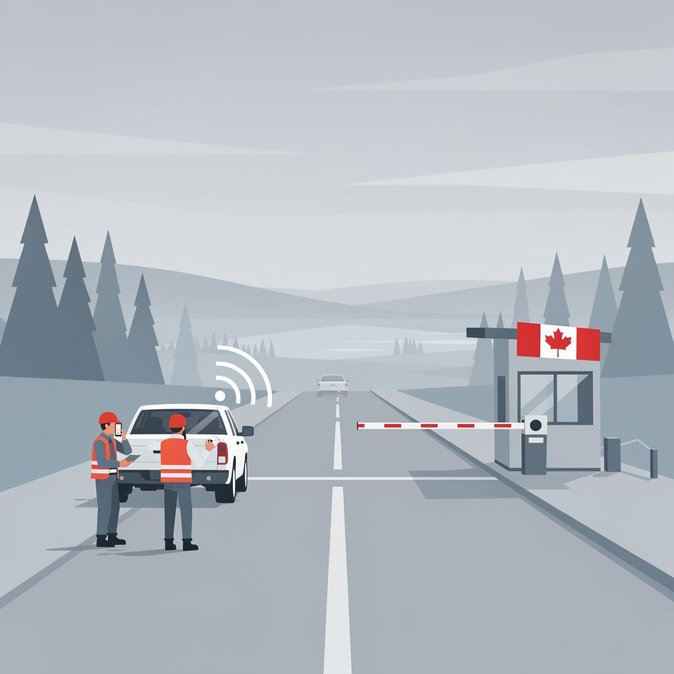
The Canada Border Services Agency (CBSA) quietly updated its Remote Area Border Crossing (RABC) program page today, confirming that all existing RABC permits will expire at 11:59 p.m. on November 30, 2026 and that the program itself will be discontinued on December 1. From that date, travellers entering Canada through remote points in north-western Ontario or via the Northwest Angle into southern Manitoba must report by telephone at designated sites or present themselves at the nearest staffed port of entry. The change ends a 22-year system that allowed U.S. boaters, anglers and cottage owners—and an increasing number of corporate field crews—to cross the border without stopping, provided they carried an RABC booklet. According to CBSA statistics, fewer than 13,000 active permits remained in circulation in 2025, down 60 percent from the pre-pandemic peak, in part because mobile connectivity now allows officers to complete most inspections remotely. For businesses, the shift is significant. Mining engineers, forestry surveyors and telecom service teams frequently relied on the RABC to shuttle equipment between northern Minnesota and Ontario’s Rainy River District or to access remote work camps on Lake of the Woods. Starting December 1, crews will need to build telephone check-ins into travel schedules and ensure satellite-phone coverage where cellular signals are weak. Failure to report could result in fines up to CAD 5,000 under the Customs Act. The CBSA says it will publish a full list of designated telephone-reporting sites next month and roll out an app-based reporting tool in early 2027. In the interim, officers will accept reports via a toll-free number operating 24/7. Travellers must provide passport details, Nexus or FAST numbers (if applicable), a list of goods and the precise coordinates of their entry point. Commercial loads still require advance eManifest filings. Companies with recurring cross-border traffic in the affected regions should audit their travel-risk protocols, update crew briefing materials and verify that insurance policies cover delays caused by reporting non-compliance. They may also consider applying for the FAST program, whose members can use streamlined reporting lanes at staffed crossings if telephone lines are congested.
Source: Canada Border Services Agency