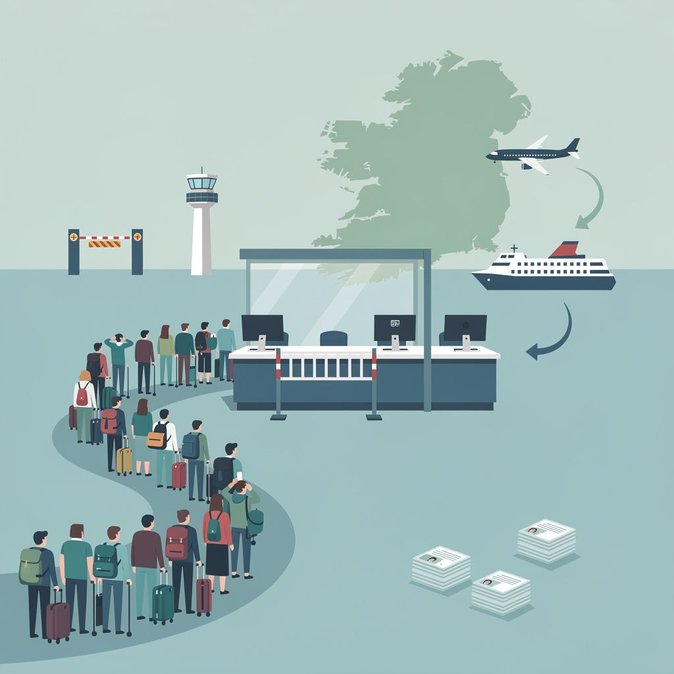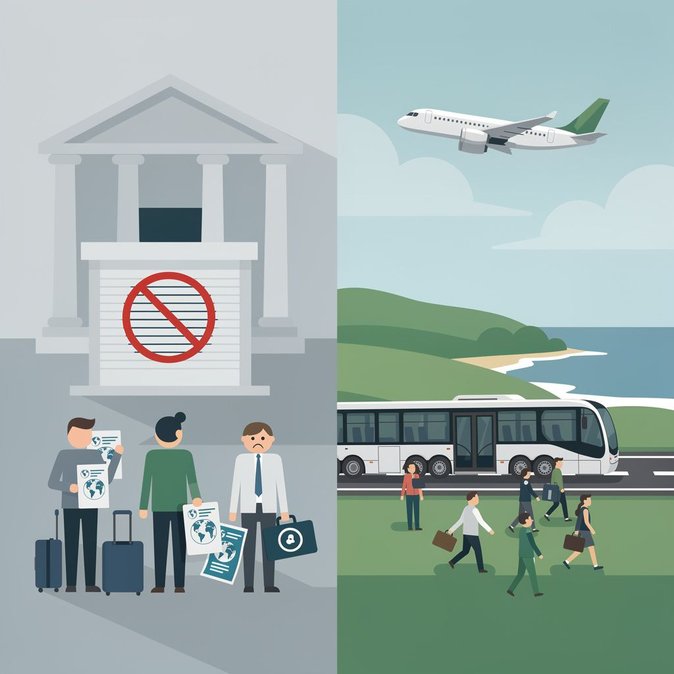
More than 300,000 teachers, health-care staff and civil servants walked off the job across Ireland on 14 October in the largest industrial action since 2019. Core transport links remained unaffected—daa confirmed that Dublin Airport’s terminals, security screening and border-control booths operated normally—but a raft of ancillary mobility services ground to a halt. Passport offices in Cork and Dublin suspended public counters, Revenue’s international assignee helplines went unanswered, and court sittings dealing with immigration judicial reviews were postponed. Travel news outlet Travel Extra reports that contingency staffing and the exclusion of semi-state commercial entities meant flights, ferries and public transport ran to timetable, averting the feared knock-on for business trips and air-cargo flows. Museums and OPW heritage sites heavily used by tourists, however, closed their doors, prompting the tourism industry to call for clearer “essential services” definitions in future disputes. Unions have given notice of a second 24-hour strike on 21 October unless pay talks resume, raising the spectre of repeated disruption at the height of the autumn visa-renewal cycle. Global mobility teams are being advised to build extra slack into travel and compliance calendars and to brief travellers about possible last-minute office closures. Government sources say mediation efforts are under way, but warn that any settlement must be cost-neutral within the 2027 budget envelope. Business lobby group Ibec argues that predictable public-sector service delivery is vital to Ireland’s reputation as a headquarters and talent hub.
Source: Travel Extra