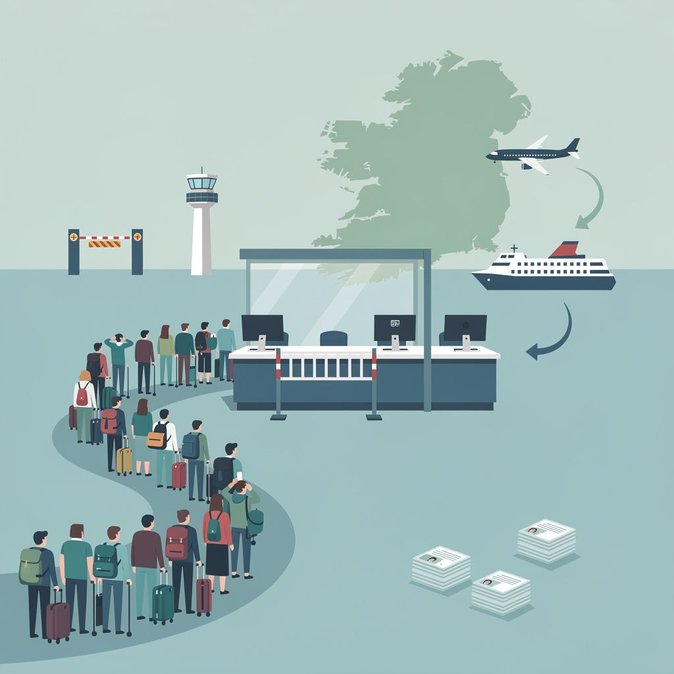
Ireland is experiencing the largest one-day public-sector stoppage in two decades, with more than 300,000 State employees – including most immigration officers, passport staff, customs officers and transport inspectors – withdrawing their labour for 24 hours. Picket lines went up at Dublin Airport, Dublin Port and the land border crossings with Northern Ireland from 00:01 on Wednesday, 14 October 2026, after talks on a new pay agreement collapsed. Although Gardaí and Defence Forces personnel are legally barred from striking, the walk-out by clerical grades in the Department of Justice and the Revenue Commissioners has effectively brought routine border processing to a halt. Dublin Airport kept its runways open but warned passengers to expect “significant queuing” at immigration desks, while Shannon and Cork Airports diverted several early-morning transatlantic arrivals to the UK so that passengers could clear immigration there before continuing to Ireland later in the day. Ferry operators Stena Line and Irish Ferries told freight customers that customs examinations would be “extremely limited” and urged drivers to travel with full paperwork in case of post-strike inspections. The Department of Foreign Affairs’ passport offices in Dublin and Cork are closed, halting the issue of first-time and emergency travel documents. The Passport Online portal remains live, but officials confirmed that no applications will be processed until at least Thursday. Consular services overseas are also curtailed; embassies may issue emergency travel letters but cannot print passports while central systems are offline. Business groups say the timing is especially damaging. Mid-October is peak season for graduate on-boarding and intra-company transfers, and many new hires were booked to visit Burgh Quay this week to register Irish Residence Permits. Tech multinationals in Dublin’s Docklands have asked assignees to postpone travel until next week and are exploring remote-onboarding options. The Irish Business & Employers Confederation (IBEC) warned that “a one-day strike could translate into weeks of downstream visa, permit and customs delays” if backlogs build up. Transport Minister Eamon Ryan told RTÉ that contingency plans – including the drafting-in of management-grade immigration officers – have “mitigated the worst delays”, but he urged travellers to check with carriers and to arrive early at ports and airports. Unions have served notice of a second 24-hour strike on 21 October if no deal is reached, raising the prospect of further disruption during the busy mid-term break.
Source: RTÉ & Irish Times live coverage