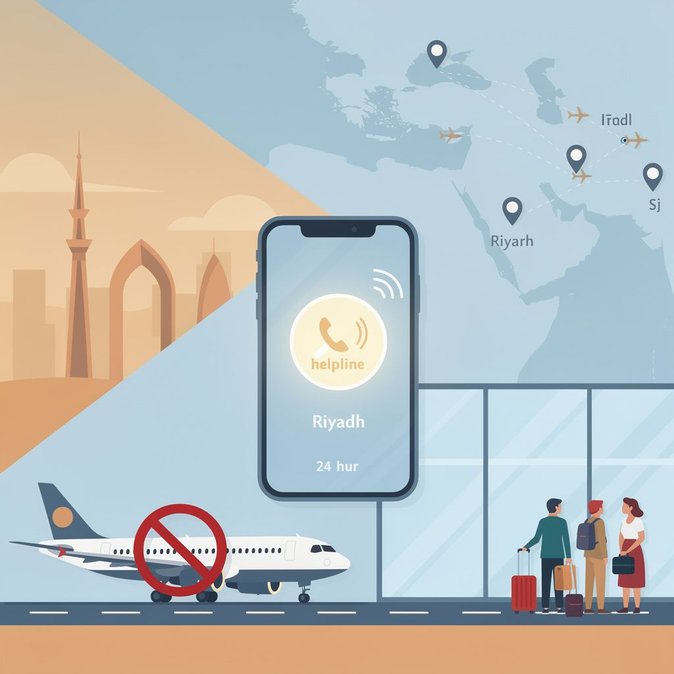
India’s Embassy in Riyadh issued a second “urgent advisory” at 15:00 local time on 14 October 2026 after a wave of Yemeni-Houthi drone and missile attacks hit civilian infrastructure in central Saudi Arabia. The note urges the estimated 2.2 million Indian nationals in the Kingdom to stay indoors during air-raid sirens, follow local authority instructions and refrain from circulating videos of explosions, a practice Saudi law treats as a security offence. The advisory reveals that all four Indian carriers—Air India, Air India Express, IndiGo and Akasa Air—have suspended services to Riyadh until at least 17 October following shrapnel damage to fuel pits at King Khalid International Airport. Flights to Jeddah, Medina and Dammam continue but with delays, while Gulf competitors Saudia and Flynas maintain limited operations. Crucially, Saudi authorities have agreed to waive over-stay penalties for Indian visitors who cannot depart before their visas expire—a relief for business travellers facing fines of SAR 25,000 (₹5.6 lakh) under normal rules. The Embassy confirmed that one Indian was killed and seven remain hospitalised after the 10 October strike on Riyadh airport; two are still in intensive care. A 24-hour control room (+966-11-488469) has been activated, and Indians needing urgent departure are advised to route through Qatar or Bahrain, provided they secure the requisite transit visas. For global-mobility managers the situation highlights the growing exposure of assignees in the Gulf to missile-attack disruption. Companies with project staff in Saudi Arabia should review shelter-in-place protocols, ensure employees are enrolled in automatic threat-alert apps such as ‘Aman’ and retain flexible evacuation budgets. Travel suppliers must also plan for surcharges as airlines re-route aircraft and crews to alternative bases such as Muscat and Kuwait, raising sector costs for Indian corporates.
Source: The New Indian Express