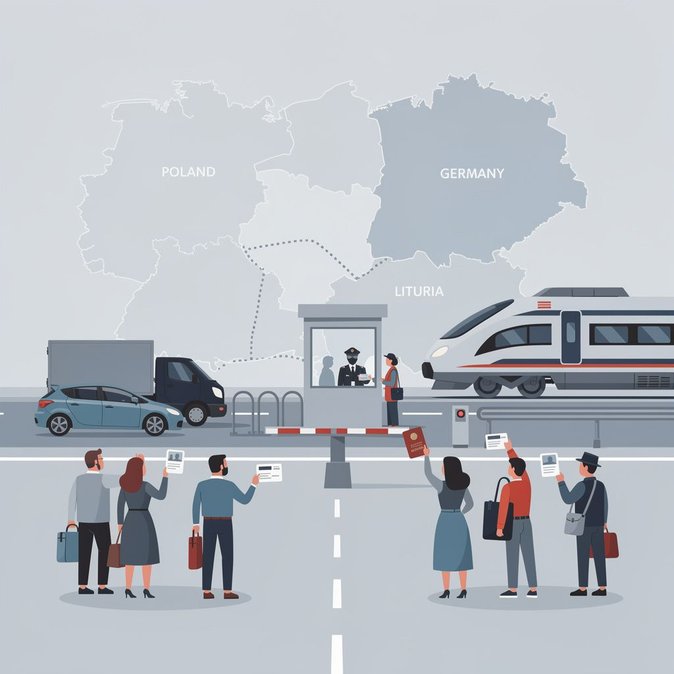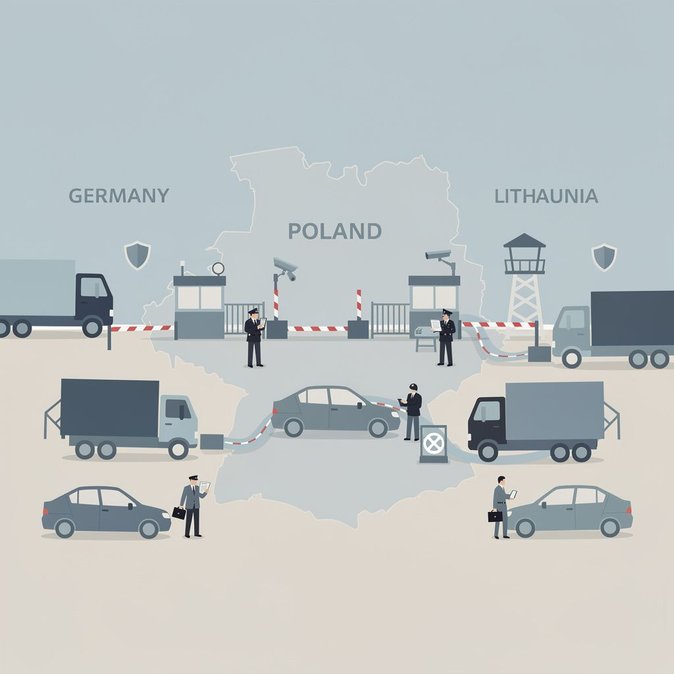
Senior leadership of Poland’s Ministry of the Interior and Administration (MSWiA) met with Border Guard commanders at headquarters in Warsaw on 14 October to assess contingency plans for the country’s 418-kilometre boundary with Belarus and the broader eastern frontier. The closed-door session, chaired by State Secretaries Czesław Mroczek and Wiesław Szczepański, focused on rapid-reaction capabilities and the adequacy of personnel and technology to counter what officials describe as ‘hybrid pressures’. Since 2 October Poland has maintained temporary internal Schengen controls on road and rail routes from Germany and Lithuania, citing secondary movements linked to the Belarus migration corridor. The Border Guard presented updated traffic-flow modelling and outlined how mobile patrols and automated Entry/Exit System (EES) kiosks are being redeployed to relieve pressure at priority crossings such as Kuźnica and Terespol. Industry observers note that a prolonged security posture could translate into longer queues for freight and business travel, especially as the holiday season approaches. Carriers have already reported average delays of 45 minutes for buses entering from Lithuania during peak hours. MSWiA officials indicated that staffing and e-gate capacity will be re-balanced if wait-times exceed the 60-minute Schengen target. For mobility and logistics teams the message is clear: build extra buffer time into itineraries for cross-border assignments, keep employment contracts and hotel bookings on hand for spot checks, and monitor daily updates on the official Granica.gov.pl portal.