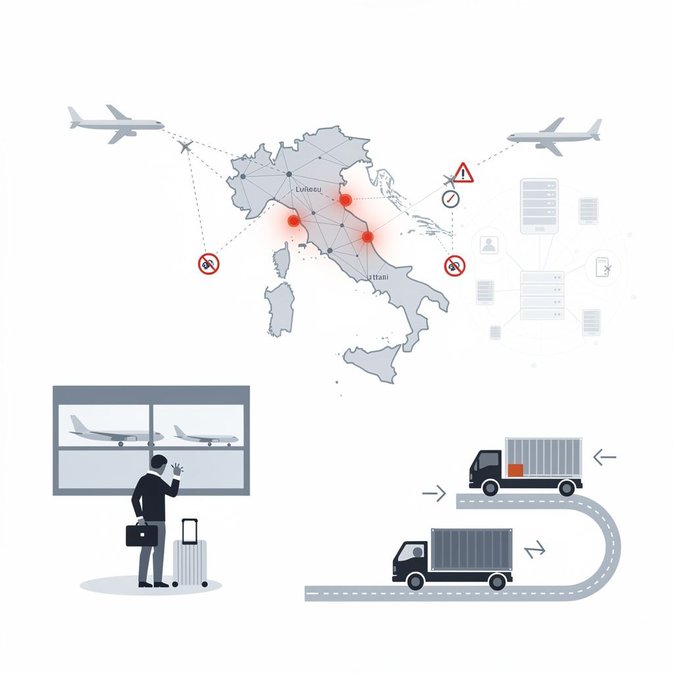
A major outage in Italy’s air-traffic-management data network forced ENAV, the national air-navigation service, to impose flow restrictions from 06:00 CET on 16 October 2026. The capacity cut rippled across European skies and hit Swiss carriers hardest on north-south trunk routes. Swiss International Air Lines cancelled multiple rotations between Zurich and Milan Linate, Bologna and Florence, while EasyJet grounded its Zurich–Naples pairing. Flights from Rome and Palermo landed in Zurich with delays exceeding two hours. Geneva departures to Turin and Venice also experienced rolling slot restrictions. Operational context: ENAV confirmed that neither cyber-attack nor sabotage was involved, but offered no timeline for full restoration. Under the Eurocontrol network-manager plan, traffic volume entering the Italian FIR (Flight Information Region) was reduced by up to 50 %. Airlines were forced to re-route via French or Austrian airspace, adding time and fuel burn. Implications for corporates: • Passenger-rights liabilities: under EU261 as mirrored in Swiss law, carriers owe duty-of-care assistance but are exempt from compensation because the disruption qualifies as ‘extraordinary circumstances’. Travel managers should still monitor rebooking costs. • Cargo knock-on: delayed belly-hold shipments from Lombardy’s life-sciences cluster could affect just-in-time supply chains into Basel. • Contingency planning: companies with critical staff movement between Swiss HQs and Italian plants should diversify via rail (Gotthard Base Tunnel) in the current week until traffic normalises. By mid-afternoon, ENAV lifted some restrictions, but Zurich Airport’s arrival board still listed isolated cancellations through the evening peak. Analysts note the incident underscores the fragility of Europe’s fragmented ATM infrastructure just months before the Schengen Entry/Exit System adds biometric border checks and further complexity.
Source: Watson.ch