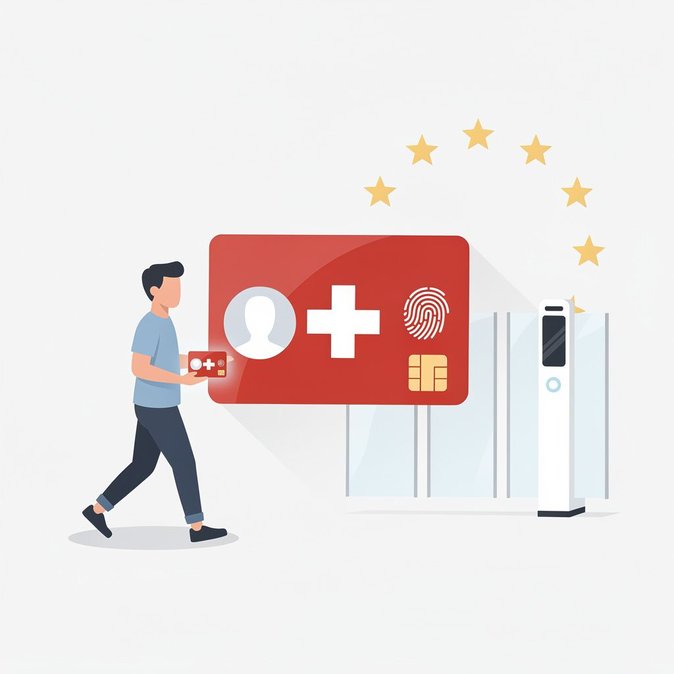
The Federal Council has confirmed that Swiss citizens will be able to apply for a new biometric identity card (IDK) from 2 November 2026. The card, announced in a 19 October media release by the Federal Office of Topography (Swisstopo), embeds an NFC chip containing the holder’s facial image and two fingerprints—bringing Switzerland in line with EU security standards for national ID documents. Unlike the e-Passport introduced in 2022, the biometric IDK remains optional. Residents who rarely travel can still request the traditional, non-chip card, while frequent EU travellers are advised to upgrade to avoid manual inspections at automated border gates after 2028, when the EU will phase out acceptance of non-biometric IDs. Pricing will stay identical to today’s non-chip card, and cantons may decide whether applications are filed at communal offices or central passport centres. For businesses the change offers smoother mobility for staff who shuttle across Europe on short notice. HR departments should budget time for renewed document collection, especially for employees whose current IDs expire in 2027–28. Swiss embassies and consulates will also issue the card, benefiting expatriates who rely on it as both travel document and proof of nationality in local onboarding processes. The launch dovetails with the wider “Bilaterals III” package, which the Federal Council sent to parliament in March 2026 to keep Swiss IDs aligned with evolving EU border technology. Authorities emphasise that the biometric IDK is distinct from the forthcoming Swiss e-ID, which serves only for digital authentication and not for travel.