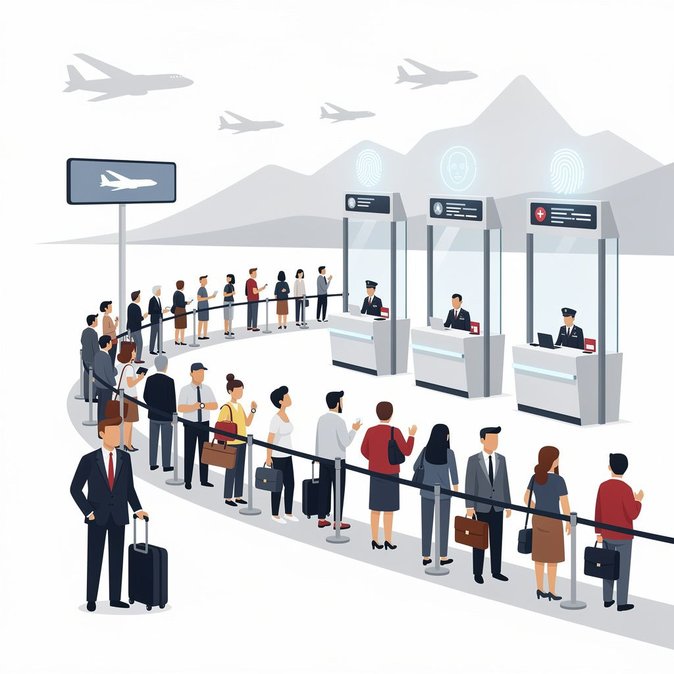
European airport association ACI Europe and airline lobby A4E issued a joint statement on 12 October 2026 warning that the EU’s biometric Entry/Exit System (EES) is still producing “unacceptable” wait times six months after full roll-out. The groups cited data from Zurich, Geneva and Basel airports showing routine peaks of 130 minutes and isolated cases exceeding five hours for third-country passengers. Industry leaders argue that the primary causes are structural: too few border-police officers, unstable IT links between national platforms and the central EES hub, and the absence of a legal mechanism to suspend biometric capture when queues exceed a critical threshold. Their six-point action plan calls for duplicate database checks to be removed, for the Travel to Europe smartphone pre-registration app to be revamped, and for temporary derogations that would let airports switch to ‘biometric-flex’ mode during surges—something Switzerland unsuccessfully lobbied for earlier this summer. Swiss authorities have so far relied on stop-gap solutions such as deploying roving ‘mobile enrolment’ teams in the arrival halls and doubling the number of self-service kiosks at Zurich Airport to 72. Despite these measures, ground handlers report a rise in missed rail connections and tight flight transfers, particularly for UK and US business travellers whose passports must be registered on first entry. Geneva Airport estimates that each additional ten-minute delay costs airlines CHF 4,000 in re-accommodation and knock-on scheduling disruptions. The Federal Office for Customs and Border Security (FOCBS) told Swiss media that it supports the ACI/A4E recommendations and is pressing the European Commission to allow automated gates for repeat travellers whose biometrics are already in the system. In parallel, Bern is testing a ‘trusted-business-traveller’ lane for crew and frequent flyers, expected to launch by March 2027 if EU partners agree. For global-mobility managers the message is clear: build at least 45 minutes of additional buffer into itineraries for non-EU assignees arriving in Switzerland, pre-register employees on the Travel to Europe portal, and consider routing through a Schengen hub with proven spare capacity until reforms take shape.
Source: Aviation24.be