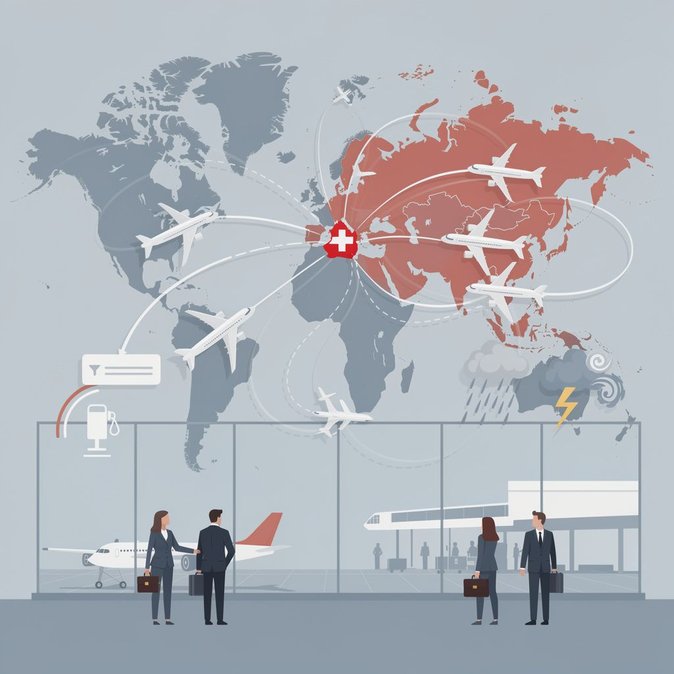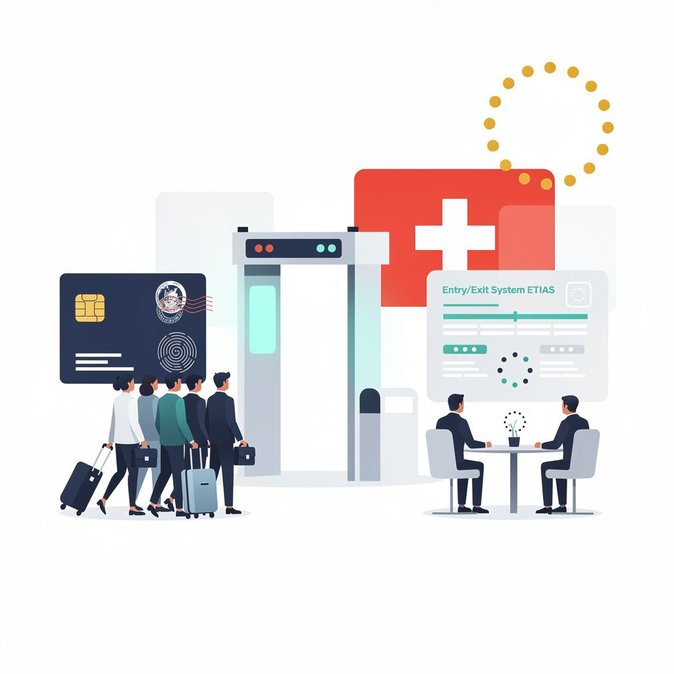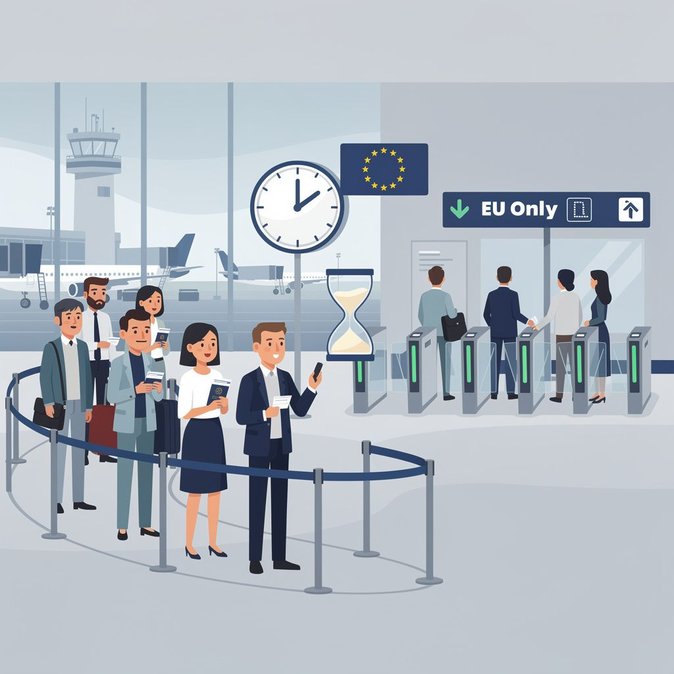
Travellers passing through Zurich Airport this week are being advised to arrive early after airport management posted a fresh alert on its passenger portal on 14 October warning of longer waiting times at passport control for non-EU visitors. The notice points to the full operationalisation of the EU’s biometric Entry/Exit System (EES), which records the facial images and fingerprints of all third-country nationals every time they cross an external Schengen border. Although Switzerland rolled out the EES hardware in stages during 2025, the system only reached “continuous availability” status this month, meaning that every departure and arrival of a visa-required traveller now prompts a compulsory biometric match. Zurich Airport says each enrolment adds roughly 40 seconds to processing time, a small delay that multiplies quickly during peak-bank departures to North America and the Middle East. The practical impact is already visible: on Monday evening, queues for manual booths in Dock E stretched to the corridor connecting the inter-terminal Skymetro, according to ground-handling firm Careport. Swiss citizens and EU/EFTA nationals can still use e-gates without new checks, but family groups with mixed passports should expect to split and re-combine after control, complicating airside rendezvous. For employers, the advice is clear. Corporate travel policies should temporarily extend the recommended airport arrival time for long-haul flights from two hours to at least two-and-a-half, and travellers who need same-day connections onto short-haul European services might consider re-timing itineraries or purchasing fast-track passes. HR teams should also remind frequent flyers that once ETIAS goes live (currently forecast for 2027), an approved travel authorisation will be mandatory in addition to the biometric border check. Zurich’s experience is likely to be mirrored at Geneva and Basel-Mulhouse in the coming weeks as the airports move from ramp-up to steady-state EES operations. The SEM has indicated it will monitor throughput times and may adjust staffing levels before the winter-travel peak.