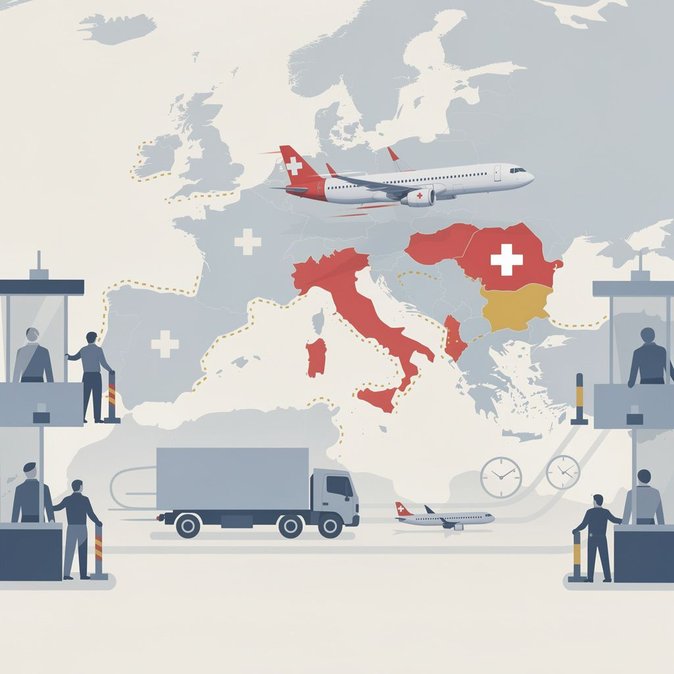
Spain’s interior ministry confirmed today that it will not renew the temporary controls it introduced at air and sea borders with Italy in August, bringing an end to a two-and-a-half-month suspension of normal Schengen travel. Italy will reciprocate by dropping its own checks on flights and ferries from Spain on 23 October. The move follows a political agreement between Prime Minister Pedro Sánchez and Italian premier Giorgia Meloni last week. For Swiss businesses the decision removes one of the last ad-hoc internal Schengen barriers still affecting key leisure and MICE markets. During the controls, travellers boarding direct Zurich–Madrid or Geneva–Rome services faced secondary ID inspections and sporadic police interviews on arrival, adding up to 45 minutes to journey times and creating missed-connection risk for inter-continental flights onward from the hubs. Swiss tour operators estimate that nearly 180,000 Swiss residents visited Spain or Italy in the past two months; customer-service teams fielded a spike in inquiries about ID validity and risk of fines for incomplete documentation. Airlines, including SWISS and easyJet, had to roster additional ground staff to handle the spot checks and saw on-time performance dip by three percentage points on the affected routes. The end of controls also restores predictability for freight forwarders using belly-hold capacity: shipment documentation will again be cleared at origin rather than re-verified on arrival, reducing spoilage risk for temperature-sensitive goods such as Swiss pharmaceuticals destined for southern Europe. While today’s announcement eases travel, companies should note that France and Germany continue partial internal checks and that future short-notice measures remain possible under Schengen rules. Travel managers are advised to keep employee profiles in booking tools up to date and ensure that nationals of non-EU countries residing in Switzerland carry residence permits as well as passports when transiting Spain or Italy.
Source: El País