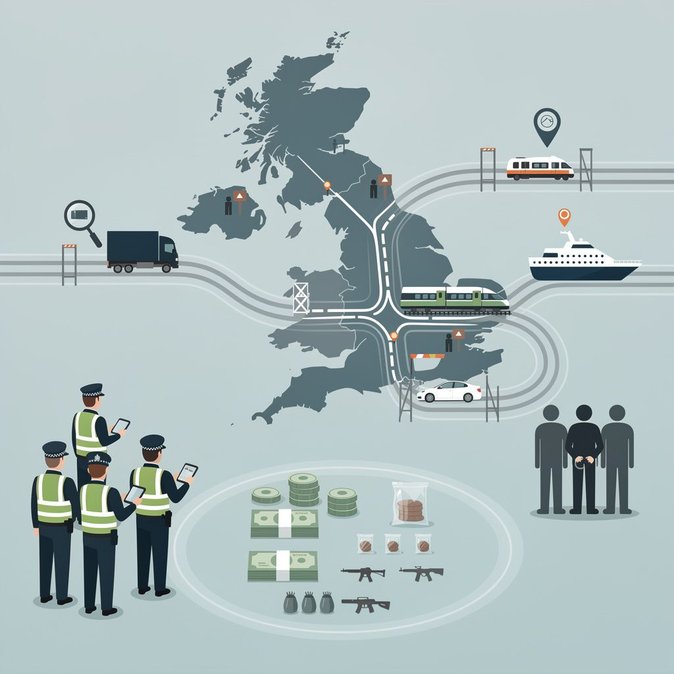
The National Police Chiefs’ Council (NPCC) has confirmed that a two-week, multi-agency sting codenamed **Operation Lockstream** has led to 452 arrests, two-thirds of which were for immigration offences. Running from 21 September to 5 October but reported publicly on 21 October, the results were released in the past 24 hours and underline the Home Office’s new strategy of attacking people-smuggling gangs *inside* the UK, not just at the Channel coast. Police forces in England, Scotland, Wales and Northern Ireland joined Border Force, Immigration Enforcement and the Home Office in 387 coordinated deployments that focused on road haulage corridors, rail hubs and small regional ports. According to Deputy Chief Constable Wendy Gunney, officers stopped more than 6,000 vehicles and questioned over 11,000 individuals. They seized 22 weapons, 40 kg of cannabis, 17,000 packets of counterfeit cigarettes, 57 mobile phones and more than £600,000 in cash. A total of 491 vehicles—mostly cars and vans believed to be used as ‘taxi’ services for irregular migrants—were impounded. Gunney said the intelligence collected will help “re-focus our efforts to ensure we target our response to have the greatest impact on organised immigration crime and protect our communities and legitimate businesses.” The crackdown is the first large-scale test of the **Organised Immigration Crime Domestic Taskforce**, created when the Border Security Command was reorganised last spring. It reflects growing concern that smuggling gangs are diversifying away from small-boat crossings and are instead moving people by road and rail once they have entered the Common Travel Area, or by exploiting ‘blind spots’ at lightly policed regional ports. For employers, the operation is a warning that enforcement activity is no longer limited to factory raids. Logistics firms, coach operators and even ride-hailing platforms can expect more stop-checks, and those found transporting undocumented workers or asylum seekers face both criminal sanctions and sponsor-licence suspension. Companies moving high-value goods should review driver vetting and trailer-seal protocols to avoid becoming unwitting accomplices. Operation Lockstream also signals a tougher line on immigration-related money laundering. The £600,000 cash haul—much of it seized from cars in motorway service areas—will now be channelled through the UK’s civil-recovery system. Any businesses whose accounts show unexplained payments linked to the arrested drivers could find themselves drawn into Proceeds of Crime Act investigations. As the festive peak approaches, corporate mobility managers should brief assignees on increased police presence around ports and remind them to carry valid ID and proof of right to work to avoid delays if stopped.