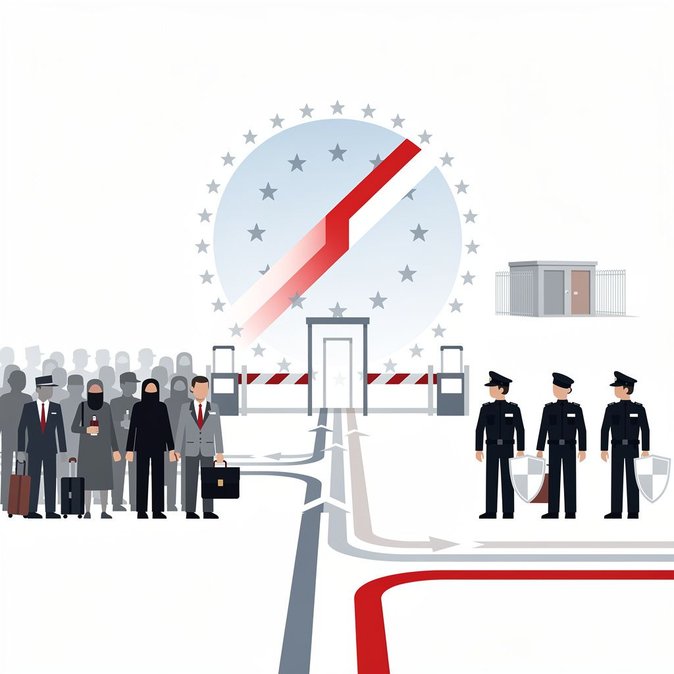
Austria’s long-serving Interior Minister Gerhard Karner used a wide-ranging newspaper interview published on 11 November to call for the right to turn away migrants en masse at EU borders without carrying out the individual asylum assessments that are currently required under European law. Karner argued that in situations of what he called “mass, organised border crossings” – for example when smugglers channel large numbers of people across a frontier in a short period – the Schengen rules should permit immediate refusal of entry. He cited the 2022 crisis on Austria’s border with Hungary, when arrivals spiked to more than 12,000 in a single month, as proof that current procedures leave frontline states overwhelmed and encourage secondary movements farther into the EU. The minister acknowledged that collective pushbacks would conflict with existing human-rights obligations, including the European Convention on Human Rights’ ban on collective expulsions. He therefore urged the European Commission and fellow member states to amend the legal framework, insisting that “the jurisprudence has to adapt to the realities on the ground”. Karner also revealed that Vienna is working with Germany, the Netherlands and other member states on agreements with unnamed third countries to host EU “return centres”. The goal, he said, is for the first charter flights carrying rejected asylum seekers to depart for these extra-European processing hubs in 2027. For employers and global-mobility managers the proposal is a reminder that Austria remains politically committed to restrictive migration controls even as labour shortages persist. Companies moving staff through Austria’s land borders – particularly the busy routes with Hungary and Slovenia – may face tighter spot checks and longer queues if the idea gains traction, while humanitarian NGOs warn that it could expose genuine refugees to refoulement risks.
Source: Heimatkurier