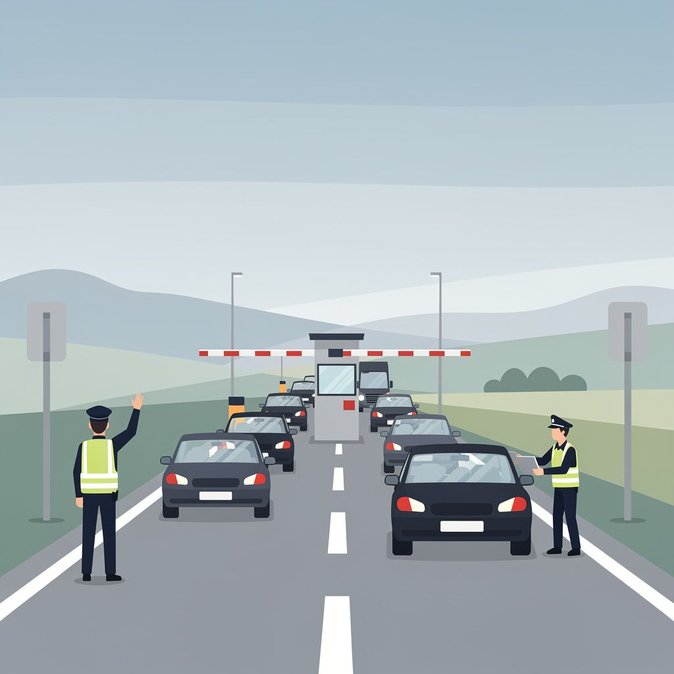
Business travellers driving between Austria and Slovenia should factor extra time into their itineraries after intensified police checks again slowed traffic at the Spielfeld–Šentilj crossing on 11 November. According to local media reports, every vehicle was stopped during the morning peak, creating a backlog of around 20 minutes. The stepped-up controls form part of Austria’s decision in September to prolong temporary internal Schengen border checks with Slovenia, Hungary, Czechia and Slovakia until at least 15 March 2027. Although Austria and Slovenia are both in the passport-free Schengen area, EU rules allow states to re-introduce controls when faced with “serious threats” to public order or internal security. Vienna argues that irregular migration, people-smuggling networks and a volatile security environment linked to conflicts in Ukraine and the Middle East justify the extension. Officials say the emphasis is now on mobile patrols across the border region rather than fixed checkpoints, yet travellers still experience sporadic bottlenecks. For corporate mobility managers the main impact is on road-based itineraries, supply-chain drivers and shuttle services between Graz, Maribor and the logistics hubs of south-eastern Austria. Companies are advised to brief travellers to carry a valid passport or national ID, keep vehicle papers handy and allow an additional 30–45 minutes for potential stops. Bus and coach operators have already begun adjusting timetables to maintain punctual connections to Vienna and beyond. The prolonged controls also raise questions for multinational firms that routinely rotate staff across Central Europe. While no visa is required for EU nationals, the uncertainty around wait times can disrupt just-in-time deliveries, on-site maintenance calls and cross-border sales visits. Trade associations have urged Vienna to publish clearer guidance on peak-hour enforcement patterns and to explore ‘green lanes’ for pre-screened commercial traffic. Looking ahead, Austrian authorities hint that the regime could be lifted sooner if EU external-border measures – including the forthcoming Entry/Exit System and the Migration & Asylum Pact – ease pressure on the Alpine republic. Until then, mobility teams should treat the Spielfeld corridor as a potential choke-point and build contingencies into travel schedules.
Source: Kosmo