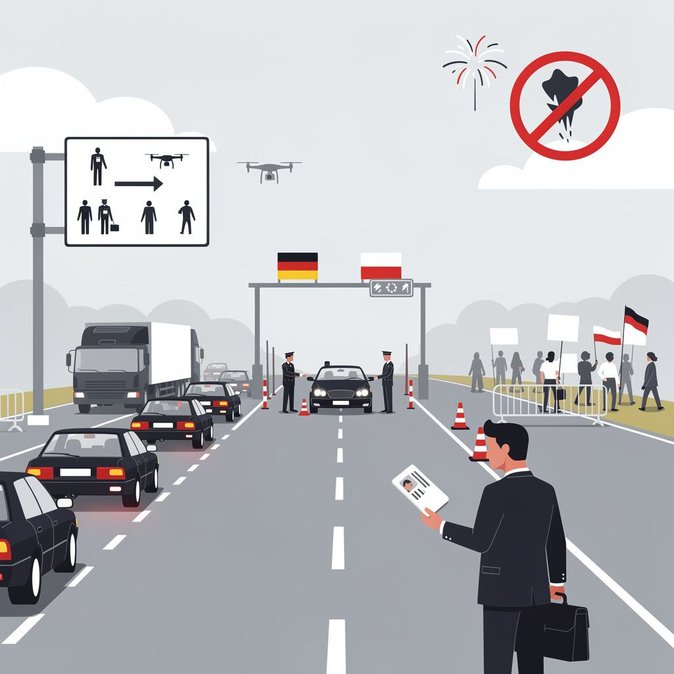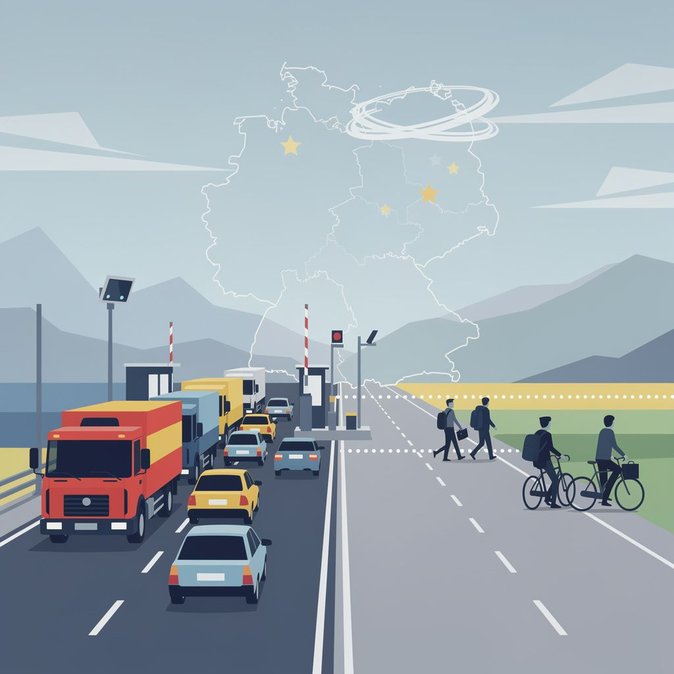
In a landmark decision issued late on 13 November, the Administrative Court of Dresden held that spot checks carried out by the Federal Police at the Polish and Czech land borders were unlawful. Two cross-border commuters had sued after they were ordered to show identification and open their car boots during routine entry checks in 2024 and 2026. The judges found that the Federal Interior Ministry had extended temporary controls far beyond the exceptional circumstances permitted by the Schengen Borders Code. The ruling is the first to question the legality of Germany’s internal border regime that has been in place—in rolling six-month extensions—since autumn 2024. While the court limited its judgment to the individual cases, it underscored that the government must demonstrate a specific and current threat each time it prolongs controls. The decision echoes earlier criticism from the European Commission, which in June asked Berlin to phase the controls out. For employers and mobility teams the judgment is more than a legal footnote: if higher courts uphold the verdict, Germany could be forced to lift checkpoints on the busy freight corridors linking Saxony and Brandenburg to Poland and the Czech Republic. That would speed up just-in-time supply chains for automotive, e-commerce and life-science companies that have complained about unpredictable queues. Conversely, if the Interior Ministry maintains controls while the case is on appeal, travellers should expect continued spot checks and must carry valid ID. The Ministry reacted within hours, announcing it would appeal to the Saxon Higher Administrative Court and insisting the «security situation» still justifies inspections aimed at deterring irregular migration and smugglers. Until a final ruling, companies should brief drivers and posted workers to allow extra time at crossings and to keep passports or national ID cards on hand. Compliance teams may also wish to review whether employee travel policies address potential searches of company vehicles and data carriers at internal EU borders.
Source: Tagesschau