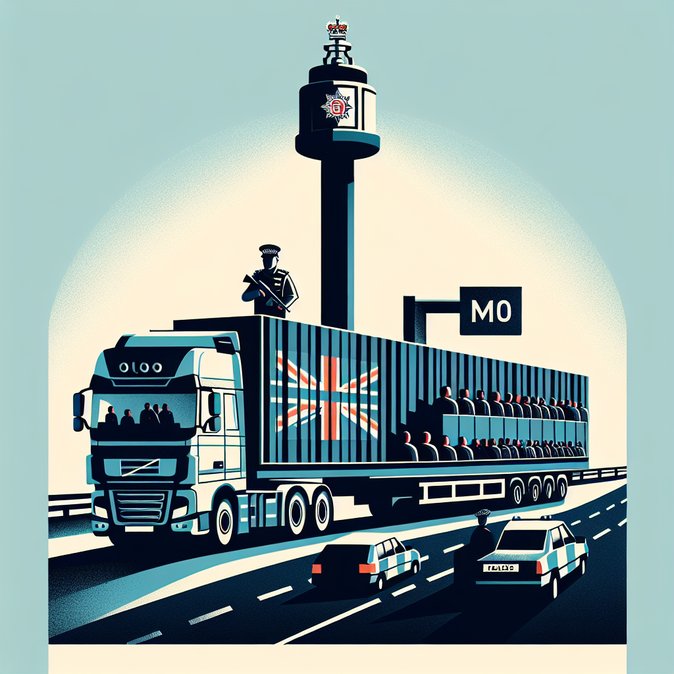
Morning commuters on the M40 near Bicester faced heavy delays on 11 December when Thames Valley Police stopped a refrigerated lorry and discovered 13 people hiding in the trailer. Officers arrested the Romanian driver on suspicion of facilitating illegal entry into the UK; the migrants—thought to be from Iraq and Vietnam—were taken for medical checks and later transferred to immigration officers for processing.
Police acted on a tip-off from a member of the public who heard banging from inside the vehicle at a motorway service area. Two lanes of the southbound carriageway were closed for three hours while officials conducted safety inspections, causing tailbacks of up to five miles.
![Thames Valley Police arrest lorry driver after 13 migrants found on M40]()
The incident comes amid a wider Home Office crackdown on clandestine entry points away from the English Channel. In November the department announced a £20 million expansion of mobile freight-screening units equipped with heartbeat detectors and CO₂ monitors. Data released last week show a 14 per cent year-on-year rise in “lorry drop” detections across inland UK roads, suggesting traffickers are diversifying away from Kent ports in response to heightened checks at Dover.
From a corporate-compliance perspective, the event is a reminder that employers receiving just-in-time deliveries must ensure haulage suppliers meet the ‘Secure Operator’ standards set out in the Civil Penalty (Carrier Liability) regime. Fines can reach £10,000 per clandestine entrant if a haulier is judged not to have taken “adequate precautions”. Mobility and supply-chain teams may therefore wish to audit contractor security protocols—particularly ahead of the busy Christmas logistics window.
Police acted on a tip-off from a member of the public who heard banging from inside the vehicle at a motorway service area. Two lanes of the southbound carriageway were closed for three hours while officials conducted safety inspections, causing tailbacks of up to five miles.

The incident comes amid a wider Home Office crackdown on clandestine entry points away from the English Channel. In November the department announced a £20 million expansion of mobile freight-screening units equipped with heartbeat detectors and CO₂ monitors. Data released last week show a 14 per cent year-on-year rise in “lorry drop” detections across inland UK roads, suggesting traffickers are diversifying away from Kent ports in response to heightened checks at Dover.
From a corporate-compliance perspective, the event is a reminder that employers receiving just-in-time deliveries must ensure haulage suppliers meet the ‘Secure Operator’ standards set out in the Civil Penalty (Carrier Liability) regime. Fines can reach £10,000 per clandestine entrant if a haulier is judged not to have taken “adequate precautions”. Mobility and supply-chain teams may therefore wish to audit contractor security protocols—particularly ahead of the busy Christmas logistics window.
Source: The Times