France issues implementation circular as EU Pact on Migration & Asylum takes effect
Geneva Closes 25 of 35 Border Crossings With France Ahead of G7 Summit in Evian
EU Migration Pact Enters Into Force, Bringing Stricter Border and Asylum Rules to France
Latest News

France issues ministerial circular to implement EU Migration & Asylum Pact
France has become one of the first EU countries to spell out exactly how the new EU Migration & Asylum Pact will work on its territory, issuing a detailed circular to all immigration services. The guidance introduces biometric border-screening, faster processing of ‘safe-country’ asylum claims and new obligations for talent visas, creating both compliance challenges and potential delays for employers relocating staff to France. Businesses should review assignment lead-times and monitor further legislative steps.

Extra police deployed at Cerbère as France tightens Franco-Spanish border under new EU rules
On 12 June, France boosted police numbers at the Cerbère border post with Spain, conducting systematic coach inspections as the EU asylum pact took effect. Travellers face short delays, and companies moving staff or goods across the frontier should adjust schedules and ensure documentation is in order.

EU Pact on Migration and Asylum Takes Effect, Bringing New Screening and Solidarity Rules to France
The EU’s new Pact on Migration and Asylum entered into force on 12 June 2026. France must now apply five-day border screenings, join a mandatory relocation or payment scheme, and grant asylum-seekers labour-market access after six months. Businesses should expect longer queues at borders this summer and earlier recruitment possibilities for certain applicants. The reform is meant to stabilise Schengen and share responsibility among member states, but its domestic political implications remain hotly debated in Paris.

Asylum appeal deadlines cut to 10 days as CNDA rewrites its docket for the EU Pact
A CNDA notice effective 12 June shortens most asylum-appeal deadlines to ten days to align with the EU Pact. New smart forms double as legal-aid requests, territorial chambers are expanded and single-judge hearings become the norm so that France can issue final decisions within 12 weeks. Mobility managers should flag the tighter clock to any assignees involved in protection claims.

Decree 2026-463 revises material reception conditions for asylum-seekers in France
Decree 2026-463, effective 12 June 2026, updates France’s asylum-support framework: cash ADA rates are income-scaled, payments can be halted if accommodation is refused, and family-reunification calculations are standardised. The reform gives employers more clarity but could restrict benefits for vulnerable applicants.

EU Migration & Asylum Pact Enters Into Force, Marking Major Shift for France and Schengen Travel
The EU’s new Migration & Asylum Pact took effect on 12 June, compelling France to introduce biometric screening and accelerated border-asylum procedures while benefiting from a solidarity mechanism designed to share responsibility across member states. Business-travel groups forecast short-term disruption at airports and land borders, but hope for smoother processing once systems bed in. The reforms matter because they tighten entry controls just as France prepares for a busy summer of cross-border travel and faces domestic debate over migration.

EU Asylum Agency marks start of Migration Pact as France readies operational roll-out
The EUAA officially launched the EU Migration and Asylum Pact on 12 June 2026, ending a two-year transition. France, which piloted several Pact tools, will receive additional EUAA support to meet strict new processing timelines and relocation quotas. Uniform EU rules mean asylum decisions elsewhere now directly affect corporate moves into France.

G7 Évian Triggers Temporary Swiss Border Controls and Travel Pass for Cross-Border Commuters
Ahead of the 15-17 June G7 Summit in Évian, Switzerland has re-introduced passport checks at its border with France until 19 June and limited crossings to seven posts. Travellers need a PASS G7 QR code to enter the secure zone. Businesses should expect road bottlenecks, schedule freight diversions, and brief cross-border staff on ID requirements.
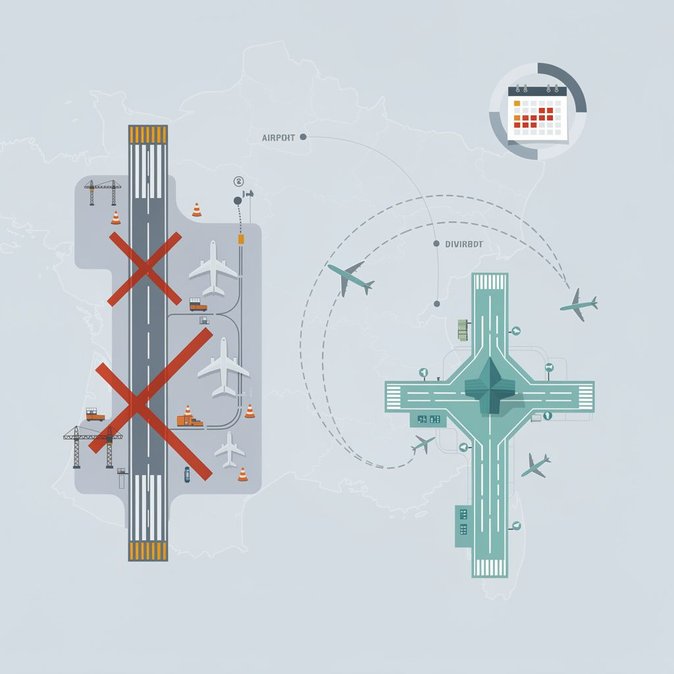
Paris-Orly to Cancel or Move 3,000 Flights as Runway 4 Closes for Four-Month Upgrade
Runway 4 at Paris-Orly will close from 10 August to 17 December 2026, forcing ADP to cancel or transfer about 3,000 flights. Corporations relying on Orly for domestic hops must re-book staff via CDG or regional airports and review Q3–Q4 schedules. Airlines will publish revised slots in July.

EU Migration & Asylum Pact takes effect: what changes today for travellers and employers in France
The EU Migration & Asylum Pact entered into force on 12 June 2026, obliging France to implement new pre-screening, Dublin transfer and solidarity mechanisms. Travellers should expect longer queues as border officers deploy biometric booths, while employers must adapt posted-worker compliance workflows to shorter deadlines. The reform aims for greater consistency but raises legal-aid concerns.

French Decrees Tighten Appeals Deadlines and Material Reception Conditions for Asylum Seekers
ASH’s 12 June legal brief confirms that decrees published earlier this week—now effective—halve certain appeal deadlines and impose stricter accommodation standards, while raising employer regularisation fees. Companies must react quickly when an assignee’s immigration status is questioned, as the window to appeal removal orders is now as short as 15 days.

G7 summit triggers temporary border controls between France and Switzerland
Switzerland has re-introduced passport checks along its border with France until 19 June for the Évian G7 summit, with France boosting its own controls in response. Only seven crossings operate normally, and key motorways will shut during leaders’ travel windows, creating delays for commuters, suppliers and delegates.

Nation-wide protests target French prefectures over residency-card delays
Activists across France rallied on 11 June against months-long delays in renewing residency cards, blaming the ANEF digital platform and understaffing. The backlog can leave expatriate employees unable to work or travel, so companies should extend planning horizons and monitor promised government fixes.

Foreign Residents Rally Nationwide Over Préfecture Appointment and Permit Backlogs
On 11 June, foreign residents protested at préfectures nationwide over long waits for residence-permit renewals and scarce online appointments. The delays disrupt business travel and job continuity; companies should start renewal formalities earlier and ensure staff carry provisional receipts when travelling.