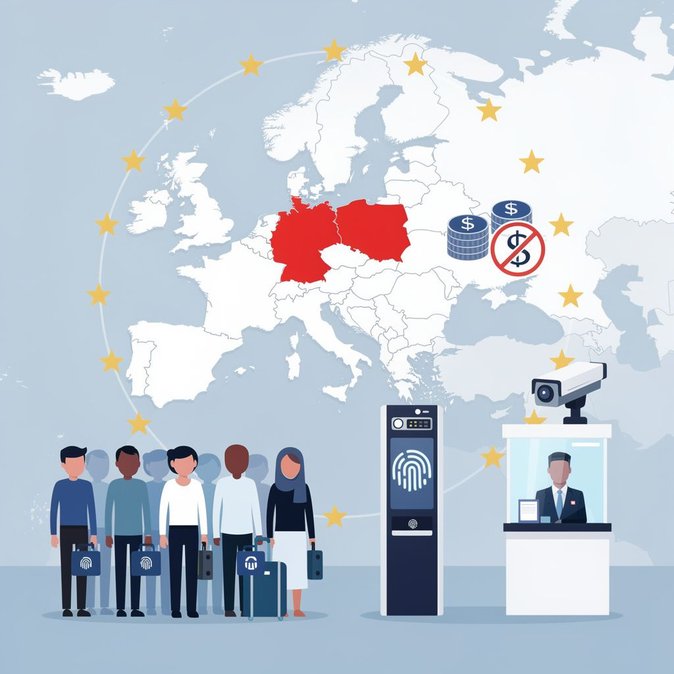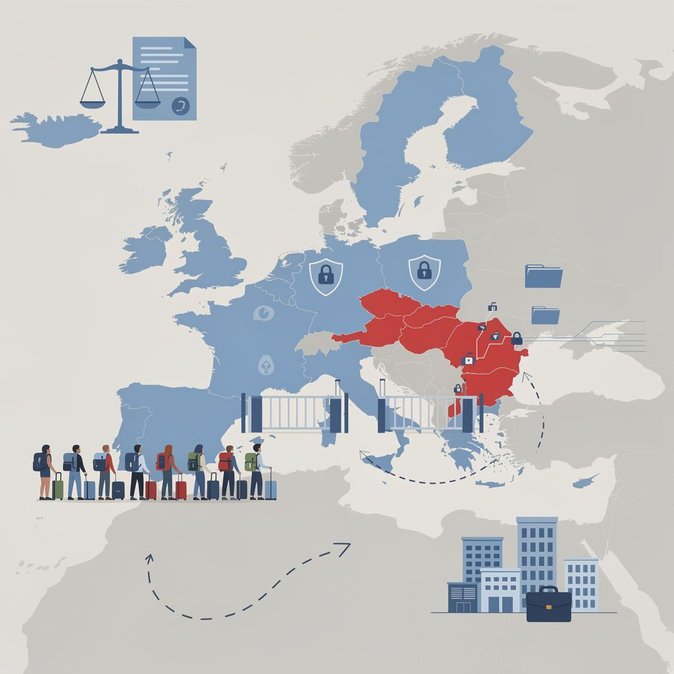
Radio Szczecin reports that, as part of the final compromise on the Migration Pact, the European Commission has granted Poland a one-year derogation from the so-called solidarity mechanism. Under Article 57 of the new regulation, Member States normally choose between accepting relocated asylum-seekers or paying a per-capita contribution—but Poland, along with Austria, Bulgaria, Croatia, the Czech Republic and Estonia, is exempt for the first 12 months. Tomasz Szymański, Under-Secretary at MSWiA, said the waiver recognises Poland’s role in hosting millions of Ukrainian war-displaced persons and is renewable “subject to annual review of migration pressures.” In practice, Polish authorities expect the exemption to become semi-permanent, citing precedent from the Baltic States following the 2021 Belarus border crisis. For employers the exemption removes the risk that future workforce-planning could be disrupted by emergency accommodation quotas in major cities. Municipal budgets will also avoid the solidarity fee—freeing local governments to keep financing language courses and labour-market activation for Ukrainian nationals, a programme widely used by multinational firms to onboard blue- and white-collar staff. Nevertheless, companies should track the review process: if Brussels determines in mid-2027 that migration pressures have eased, Poland could be asked to contribute places or funds with only six months’ notice. HR and global-mobility teams may wish to map alternative regional hubs (e.g., Vilnius, Prague) to maintain deployment flexibility.
Source: Radio Szczecin