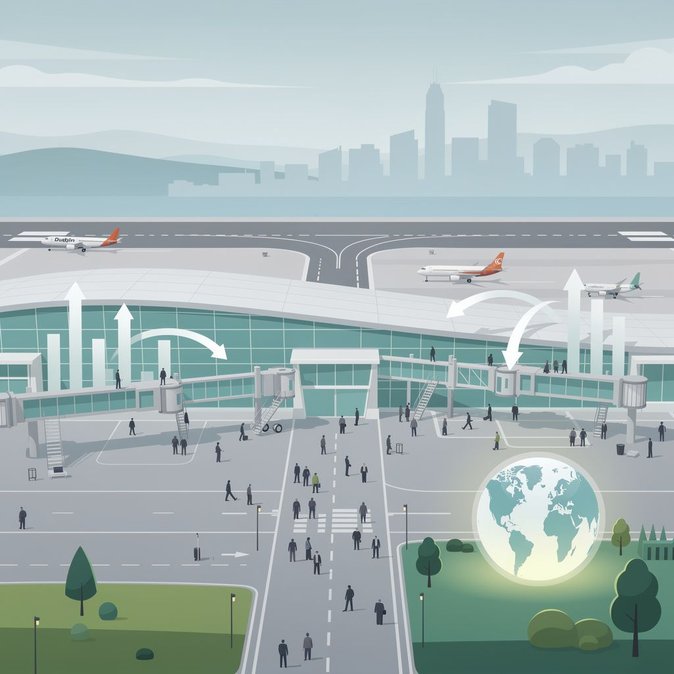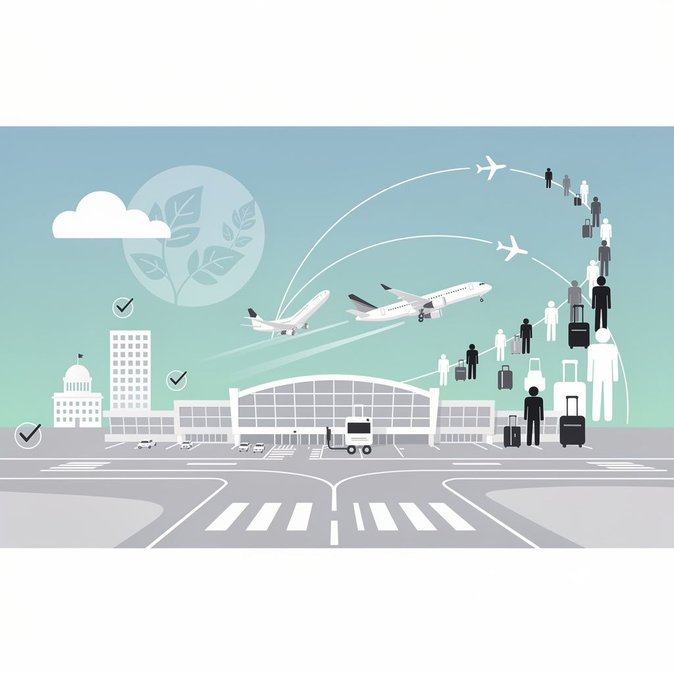
Ireland’s main international gateway has moved a decisive step closer to unrestricted growth after Cabinet signed off on the Dublin Airport (Passenger Capacity) Bill 2026 yesterday evening (16 June). The draft legislation — steered through Government by Minister for Transport Darragh O’Brien — would give the Minister power to amend or revoke the statutory 32-million-passenger limit that Fingal County Council attached to a 2007 planning permission for the airport’s second terminal.
In practical terms, the cap has already become a hard ceiling: Dublin handled 31.9 million travellers in 2025 and is on course to smash the limit this summer. Without legislative action the daa (the State-owned airport operator) warned airlines that it would have to refuse new slots and curb growth, an outcome business groups described as “economically self-harming” for a small island economy that depends on air connectivity.
The Bill sets out a two-stage process. First, An Coimisiún Pleanála (ACP) will run an expedited environmental assessment — including a public consultation — to confirm that lifting the cap complies with EU environmental law. Once that report lands, the Minister can, by order, raise or scrap the ceiling. Crucially, the text also prevents any future planning permission from re-imposing a numeric passenger cap, giving airlines and investors long-term certainty.
daa welcomed the move, calling it “hugely important for Ireland”. Deputy CEO Nick Cole said removing the cap dovetails with the airport’s separate Infrastructure Application now before Fingal County Council, which seeks approval for new piers, aircraft stands and an integrated transport hub.
Whether you’re a business traveller eyeing the new capacity or an HR manager moving talent to Ireland, VisaHQ can simplify the visa process. The company’s online platform (https://www.visahq.com/ireland/) offers real-time guidance on Irish entry requirements, personalised document checklists and concierge support, ensuring travellers are compliant and ready to take advantage of the extra seats as soon as they appear.
Airlines are already planning network expansions from Dublin for winter 2026/27 and have lobbied strongly for a fix before the Oireachtas summer recess.
For global mobility managers the change matters on three levels: it safeguards seat availability for inbound assignees, underpins the hub-and-spoke connections that multinationals use for EMEA travel, and signals that the State is prioritising aviation competitiveness.
Assuming the Bill is enacted and an order is signed before the end of July, airlines will be able to load additional capacity into the 2027 schedules, easing pressure on premium fares and airport congestion.
In practical terms, the cap has already become a hard ceiling: Dublin handled 31.9 million travellers in 2025 and is on course to smash the limit this summer. Without legislative action the daa (the State-owned airport operator) warned airlines that it would have to refuse new slots and curb growth, an outcome business groups described as “economically self-harming” for a small island economy that depends on air connectivity.
The Bill sets out a two-stage process. First, An Coimisiún Pleanála (ACP) will run an expedited environmental assessment — including a public consultation — to confirm that lifting the cap complies with EU environmental law. Once that report lands, the Minister can, by order, raise or scrap the ceiling. Crucially, the text also prevents any future planning permission from re-imposing a numeric passenger cap, giving airlines and investors long-term certainty.
daa welcomed the move, calling it “hugely important for Ireland”. Deputy CEO Nick Cole said removing the cap dovetails with the airport’s separate Infrastructure Application now before Fingal County Council, which seeks approval for new piers, aircraft stands and an integrated transport hub.
Whether you’re a business traveller eyeing the new capacity or an HR manager moving talent to Ireland, VisaHQ can simplify the visa process. The company’s online platform (https://www.visahq.com/ireland/) offers real-time guidance on Irish entry requirements, personalised document checklists and concierge support, ensuring travellers are compliant and ready to take advantage of the extra seats as soon as they appear.
Airlines are already planning network expansions from Dublin for winter 2026/27 and have lobbied strongly for a fix before the Oireachtas summer recess.
For global mobility managers the change matters on three levels: it safeguards seat availability for inbound assignees, underpins the hub-and-spoke connections that multinationals use for EMEA travel, and signals that the State is prioritising aviation competitiveness.
Assuming the Bill is enacted and an order is signed before the end of July, airlines will be able to load additional capacity into the 2027 schedules, easing pressure on premium fares and airport congestion.