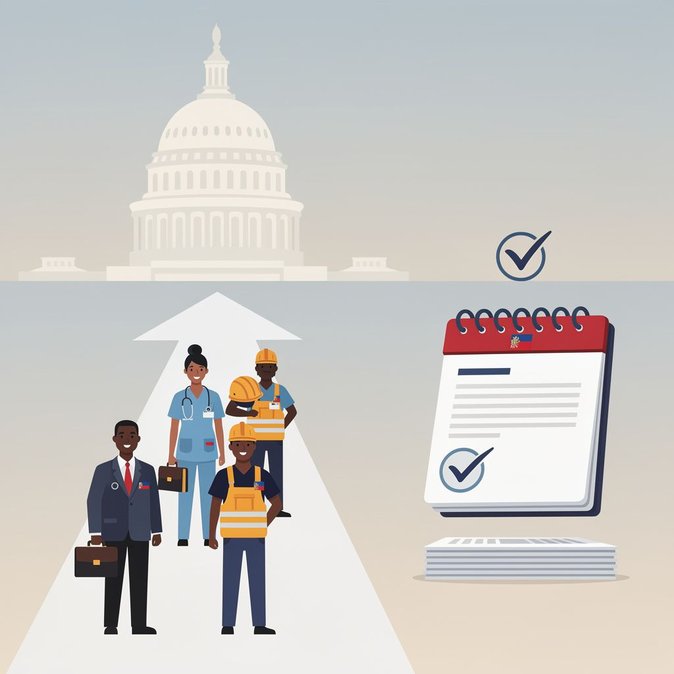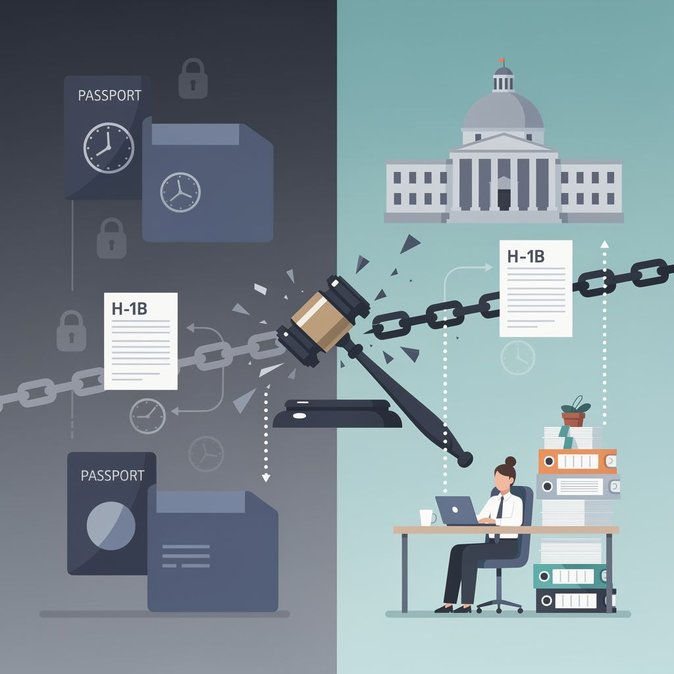
Writing on 19 June, Duane Morris attorney M. Alejandra Vargas detailed how the immigration bar’s long fight against four little-known USCIS hold policies finally paid off—at least on paper. On 5 June, the U.S. District Court for the District of Rhode Island vacated the agency’s “Global Asylum Hold,” “Benefits Hold,” “Comprehensive Re-Review,” and “Country-Specific Factors” directives, which for years had paused the adjudication of employment petitions and adjustment cases filed by nationals of so-called “travel-ban” countries. USCIS publicly acknowledged the vacatur on 11 June and told stakeholders the policies “should be treated as though they are not in effect.”
If you or your employees need help navigating the new landscape, VisaHQ’s team and self-service platform can streamline the preparation of travel visas, work authorizations, and related documents. Up-to-date checklists and live support at https://www.visahq.com/united-states/ cut through bureaucratic uncertainty so that global-mobility plans stay on schedule even as USCIS rules shift.
Yet, two weeks later, practitioners report no appreciable uptick in decisions for the thousands of H-1B extensions, I-485 green-card applications, and EAD renewals that have languished—some for more than two years. The agency has appealed but did not seek a stay, so the vacatur stands. For companies with employees from Iran, Syria, Yemen, and other affected nations, the ruling is a mixed blessing. It provides a clear legal hook to demand action, especially for cases in premium processing—firms can now cite the court order in follow-up emails and, if necessary, threaten mandamus suits. But normal-processing cases remain stuck in the agency’s opaque backlogs; USCIS’s published processing times continue to lengthen, making it difficult even to file service requests. Vargas urges employers to marshal congressional offices and industry groups to pressure USCIS leadership and to prepare litigation if cases do not move. She also recommends tracking the First-Circuit appeal: a reversal could restore the holds, while an affirmance would cement the win and may force USCIS to re-allocate resources. For global-mobility programs, the practical takeaway is to audit dockets for any petitions flagged by the old policies and act now—before the window potentially closes. The decision is a rare bright spot for workers caught in travel-ban limbo, but only aggressive follow-through is likely to translate legal victory into real-world approvals.

If you or your employees need help navigating the new landscape, VisaHQ’s team and self-service platform can streamline the preparation of travel visas, work authorizations, and related documents. Up-to-date checklists and live support at https://www.visahq.com/united-states/ cut through bureaucratic uncertainty so that global-mobility plans stay on schedule even as USCIS rules shift.
Yet, two weeks later, practitioners report no appreciable uptick in decisions for the thousands of H-1B extensions, I-485 green-card applications, and EAD renewals that have languished—some for more than two years. The agency has appealed but did not seek a stay, so the vacatur stands. For companies with employees from Iran, Syria, Yemen, and other affected nations, the ruling is a mixed blessing. It provides a clear legal hook to demand action, especially for cases in premium processing—firms can now cite the court order in follow-up emails and, if necessary, threaten mandamus suits. But normal-processing cases remain stuck in the agency’s opaque backlogs; USCIS’s published processing times continue to lengthen, making it difficult even to file service requests. Vargas urges employers to marshal congressional offices and industry groups to pressure USCIS leadership and to prepare litigation if cases do not move. She also recommends tracking the First-Circuit appeal: a reversal could restore the holds, while an affirmance would cement the win and may force USCIS to re-allocate resources. For global-mobility programs, the practical takeaway is to audit dockets for any petitions flagged by the old policies and act now—before the window potentially closes. The decision is a rare bright spot for workers caught in travel-ban limbo, but only aggressive follow-through is likely to translate legal victory into real-world approvals.