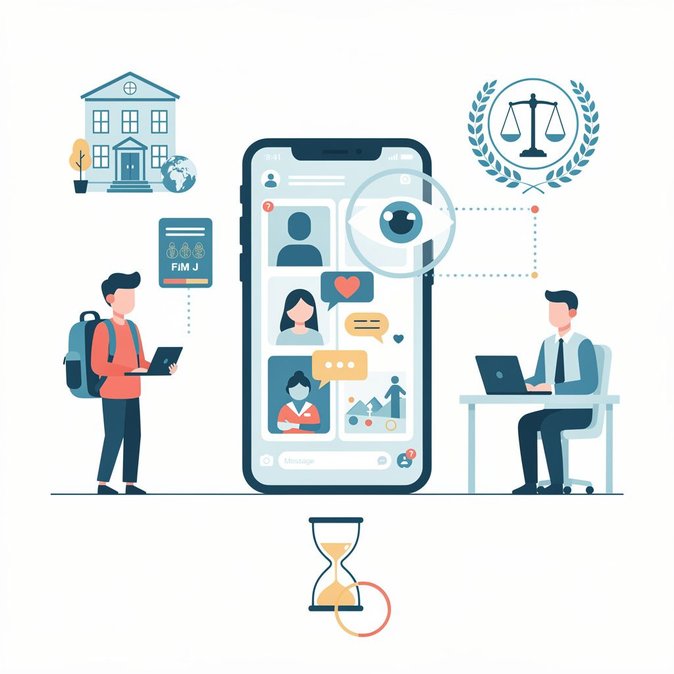
In an unannounced policy change posted to the State Department’s website on 20 June 2026, consular officers were instructed to tell every applicant in the student (F and M) and exchange-visitor (J) categories to switch all personal social-media accounts from “private” to “public” for the duration of the visa process. The notice – tucked into the Department’s public-affairs archive and quickly picked up by university compliance offices – says the step is needed to give officers “real-time insight into applicants’ intent and affiliations.” The directive goes well beyond the 2019 requirement to list identifiers used on major platforms. Now, visa applicants must proactively change their privacy settings so that officers may scroll through historical posts during or after the consular interview. Refusal to comply will be treated as a failure to establish eligibility under INA §214(b) – the same standard used for suspected immigrant intent – even for short-term exchange visitors. Universities and program sponsors are scrambling to brief tens of thousands of incoming students before fall orientation. Several, including the University of Illinois and Columbia, have issued guidance warning that deleting posts or restricting visibility after the interview could be construed as “misrepresentation.” Immigration attorneys say corporate assignees on J-1 trainee programs should also review their online presence, because controversial political statements or photos that appear to conflict with U.S. public-health advice could now trigger administrative processing. For multinational employers, the practical impact is two-fold. First, on-boarding timelines for foreign interns and cooperative-education hires may lengthen as applicants curate profiles and await extra security checks. Second, HR teams must update privacy and social-media policies to avoid instructing applicants to do anything that might be viewed as evidence tampering. Compliance specialists advise archiving screenshots of profiles as they existed at the time of application to prove good-faith adherence. Although the change currently targets only F, M and J visas, observers expect business categories such as H-1B and L-1 to be added if the policy withstands legal challenges from privacy-rights groups expected later this summer.