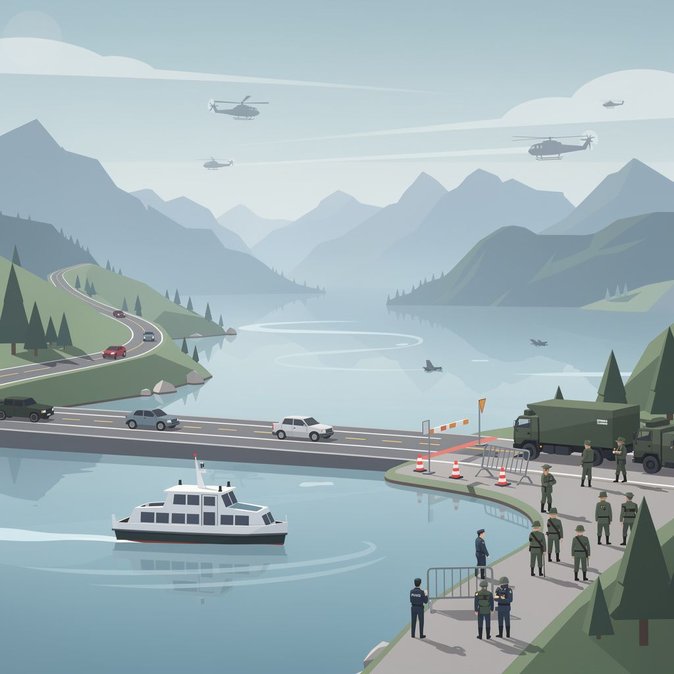
The Swiss Armed Forces and Federal Police announced on 23 June 2026 that their week-long assistance mission for the Lake Lucerne Summit at Bürgenstock has been “successfully completed”. Around 1 300 troops per day had supported cantonal police since 19 June, guarding foreign delegations, escorting motorcades and enforcing temporary no-fly zones. Five incursions were recorded in the restricted airspace; in two cases Swiss F/A-18s intercepted and escorted civil aircraft back to approved corridors. No ground-security incidents were reported. With the conference concluded, all flight restrictions over Central Switzerland were lifted at 18:00 CET on 23 June, and military checkpoints on local access roads dismantled overnight. Geneva-based charter operators told Global Mobility News that VIP slot allocations at Zurich and Bern airports – frozen during the summit – returned to normal by the morning of 24 June, easing pressure on corporate shuttle flights. The Federal Office of Civil Aviation (FOCA) has nevertheless urged pilots to check NOTAMs carefully: similar air-defence measures may be re-imposed during the WTO ministerial in November. For mobility managers, the episode is a reminder that Switzerland, despite its Schengen membership and normally light internal controls, can reinstate stringent security cordons around high-profile events. Companies scheduling board retreats or incentive trips in resort areas should build extra buffer time into itineraries and monitor FOCA and Cantonal Police feeds for pop-up restrictions. The summit also showcased Switzerland’s expanding counter-drone capabilities; the army deployed electromagnetic jamming to enforce a 2 km drone exclusion zone – a first for a domestic civilian conference. Event organisers may soon be required to include anti-drone plans in permit applications. Cost-wise, the defence ministry said the operation generated “only marginal” additional expenditure, absorbed within the ordinary VBS budget. However, the Canton of Nidwalden hinted that police overtime could exceed CHF 2 million, a bill partially chargeable to the summit organiser. Local tourism boards are lobbying Bern for compensation, claiming last-minute cancellations from leisure travellers deterred by the security perimeter.