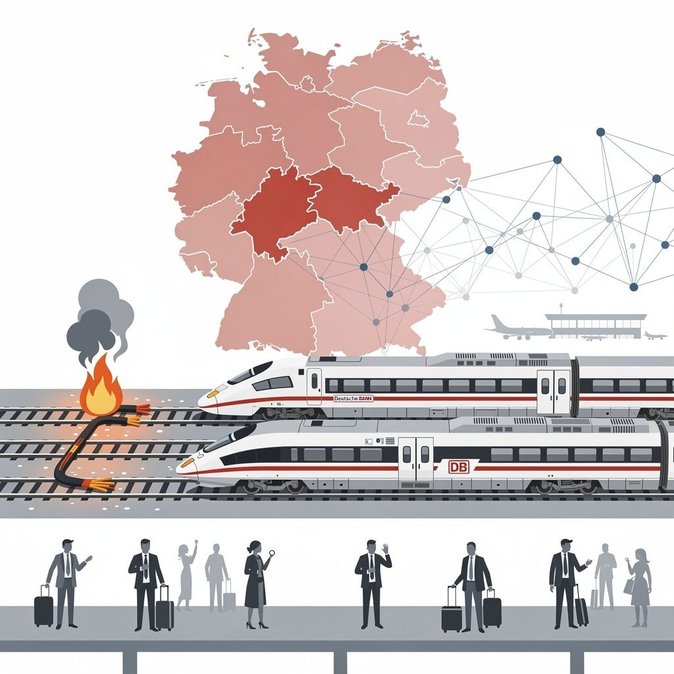
Germany’s rail network suffered one of its biggest disruptions of the year overnight when the digital GSM-R communications system failed for almost two hours, forcing Deutsche Bahn (DB) to halt all long-distance and regional trains. While the national network was gradually restarted around 00:30, passengers in the state of Hessen continued to face cancellations on 24 June after a separate cable fire knocked out a signalling relay between Frankfurt and Gießen. ICE services on the key north-south axis (Hannover–Frankfurt–Karlsruhe) were cancelled, while multiple regional lines (RB41, RB48/49, RE98/99) and the Frankfurt S-Bahn S6 operated with truncated routes or 30-minute headways. DB said engineers restored the GSM-R backbone by switching to a fallback server cluster but gave no immediate cause for the original crash. The fire-damaged cable bundle is proving harder to replace, and the operator warned that “significant restrictions” could persist through the evening rush hour. Replacement buses are running, but journey times between Kassel, Gießen and Frankfurt are up to 90 minutes longer. For corporate mobility programmes the incident highlights the vulnerability of Germany’s rail-first travel policies, especially for same-day business trips. Companies with travellers booked on disrupted services have been authorised to switch to car-rental or airline options without prior approval. DB will refund fully flexible tickets and rebook seat reservations automatically once services resume. Travel managers should monitor DB’s “Störungsmelder” and push real-time alerts to employees, particularly those connecting at Frankfurt Airport, where missed rail-air connections can trigger re-ticketing costs.
Source: Frankfurter Rundschau