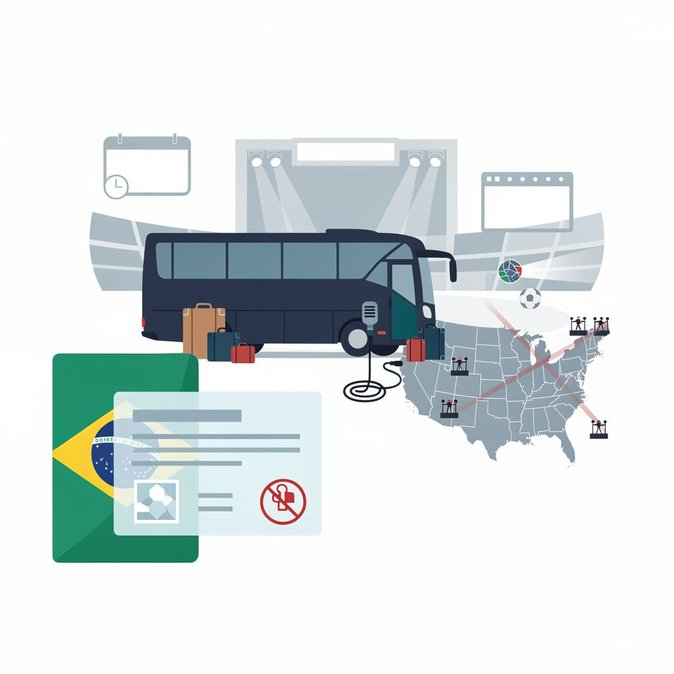
The Brazilian government quietly released the consolidated text of the Mercosur–European-Union Partnership Agreement (EMPA) on 24 June, only weeks after the bloc’s Interim Trade Agreement (ITA) began provisional application on 1 May. Although the headlines have focused on tariff-free quotas for beef and poultry, the 2,600-page document also contains a dedicated chapter on the temporary entry of businesspersons, independent professionals and intra-company transferees. Under the chapter, Brazil and the EU agree to issue short-term business visitor visas of up to 90 days “in five working days wherever possible” and to create fast-track consular lanes for investors whose projects exceed €1 million. Graduate trainees moved within a company will be eligible for stays of up to one year, renewable once, while highly-skilled transferees may remain for three. The pact also sets a 60-day target for decisions on work permits and calls for mutual recognition of professional qualifications in engineering and ICT to be negotiated within two years of entry into force. For multinational employers the timetable matters: tariff cuts started on 1 May, but the mobility concessions will only become binding when the EMPA itself is ratified by every EU and Mercosur legislature. In the meantime, Brasília has mandated all federal ministries to prepare administrative changes so that Brazil can implement the new visa categories “on day one” once Brussels signs off. Companies are therefore advised to start mapping which assignees, contractors and service suppliers could benefit from the streamlined rules and to budget for early adoption costs such as updated immigration software and HR training. Trade lawyers note that the agreement contains a “rendez-vous clause” allowing either side to suspend preferential treatment if the other imposes new barriers on the movement of persons. That gives both blocs an incentive to keep consular processing times under control—welcome news at a time when U.S. visa backlogs for Brazilian executives still exceed 200 days in São Paulo. Businesses that rely on dual EU-Mercosur supply chains—automotive, aerospace and agritech in particular—stand to gain the most from quicker technician deployments and simpler short-term travel for after-sales support. If ratification proceeds smoothly the labour-mobility chapter could be in force by late-2027. Firms should watch the European Parliament’s trade committee vote, expected after the summer recess, and Brazil’s own Congressional debate, where legislators have indicated they will seek annual reporting on how many visas are issued under the new categories.