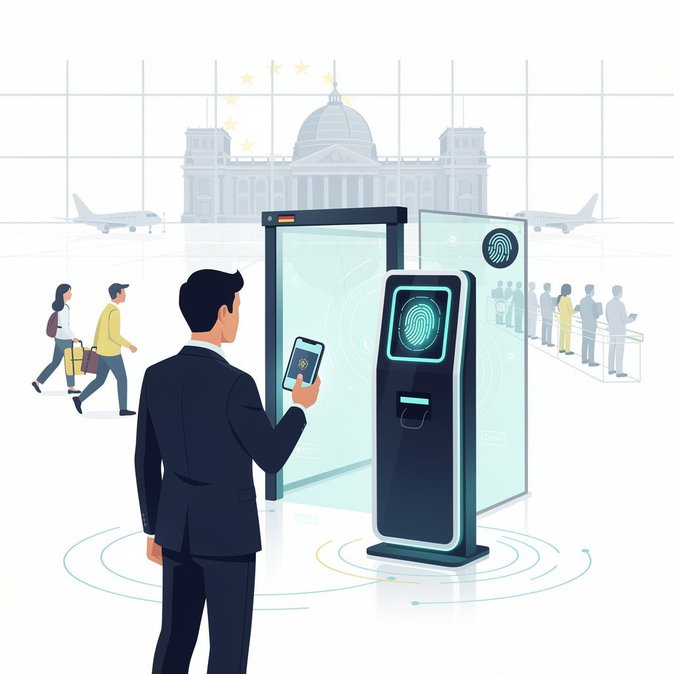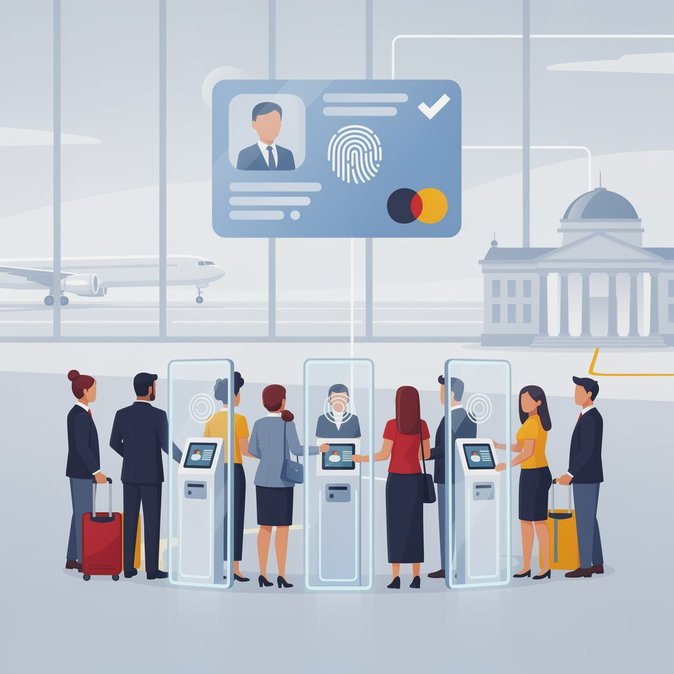
The German Bundestag has scheduled a final vote for Friday, 26 June, on a government bill that would allow airlines and airports to process passengers entirely digitally. The draft—tabled under the title “Gesetz zur Ermöglichung der digitalen Fluggastabfertigung”—amends five separate statutes, including the Aviation Act, Passport Act and Residence Act, to legalise the use of biometric “Digital Travel Credentials” at every stage from check-in to boarding. If adopted, travellers who opt in will be able to load an encrypted digital ID to their smartphone wallet and pass through automated checkpoints without showing a physical passport.
Whether you’re a business traveller or part of a mobility team, VisaHQ can streamline the documentation side of your trip long before you reach the biometric gate. Their Germany portal (https://www.visahq.com/germany/) offers up-to-date guidance on visas, passports and the new Digital Travel Credential programme, so you can check requirements, submit applications and monitor status in one place.
The system relies on live facial recognition and back-end document authentication; forged or stolen passports should therefore be detected earlier, the Transport Ministry argues. The Bundesrat has asked the government to tighten data-protection language, but broadly supports the measure. Airports such as Frankfurt and Berlin-Brandenburg have already trialled similar solutions, but legal uncertainty has prevented nationwide rollout. Industry lobby ADV says the law could shave “15–20 seconds per traveller” off current processing times—vital as passenger numbers are expected to hit a record 250 million in 2027. Airlines hope the reform will let them redeploy staff from manual boarding-pass checks to customer service, while corporate-travel managers welcome the promise of shorter queues and more predictable connection windows. For global-mobility teams the message is clear: begin updating travel policies, brief employees on the voluntary nature of the scheme, and coordinate with data-protection officers on acceptable-use guidelines. Early adopters are likely to be fast-track passengers and frequent-flyer programmes, but the government wants the digital option to be available to every traveller by summer 2027.
Whether you’re a business traveller or part of a mobility team, VisaHQ can streamline the documentation side of your trip long before you reach the biometric gate. Their Germany portal (https://www.visahq.com/germany/) offers up-to-date guidance on visas, passports and the new Digital Travel Credential programme, so you can check requirements, submit applications and monitor status in one place.
The system relies on live facial recognition and back-end document authentication; forged or stolen passports should therefore be detected earlier, the Transport Ministry argues. The Bundesrat has asked the government to tighten data-protection language, but broadly supports the measure. Airports such as Frankfurt and Berlin-Brandenburg have already trialled similar solutions, but legal uncertainty has prevented nationwide rollout. Industry lobby ADV says the law could shave “15–20 seconds per traveller” off current processing times—vital as passenger numbers are expected to hit a record 250 million in 2027. Airlines hope the reform will let them redeploy staff from manual boarding-pass checks to customer service, while corporate-travel managers welcome the promise of shorter queues and more predictable connection windows. For global-mobility teams the message is clear: begin updating travel policies, brief employees on the voluntary nature of the scheme, and coordinate with data-protection officers on acceptable-use guidelines. Early adopters are likely to be fast-track passengers and frequent-flyer programmes, but the government wants the digital option to be available to every traveller by summer 2027.