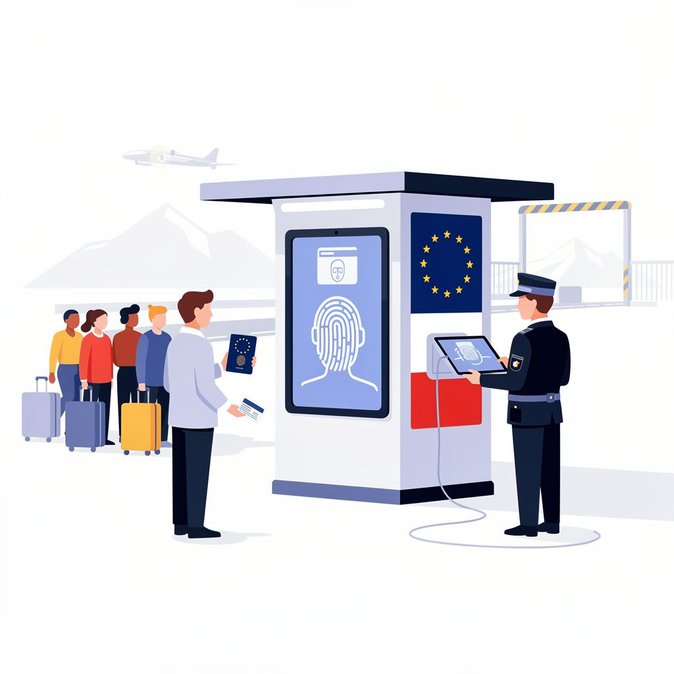
On 29 June 2026, trade journal *Travel and Tour World* confirmed that Austria and 28 other Schengen countries have switched fully from manual passport stamping to the biometric EU Entry/Exit System (EES). The move means that every non-EU traveller entering or leaving the Schengen Area for a short stay now has their passport scanned, facial image captured and fingerprints taken once every 36 months. The data are stored in a central EU database accessible to border forces and, under strict conditions, law-enforcement agencies. For Austrian airports—chiefly Vienna International and Salzburg—EES is already operational at all non-Schengen gates. Airlines must ensure that passengers first enrol at a staffed desk or self-service kiosk before using eGates on subsequent trips. Operators report that initial transactions take 90–120 seconds versus 20–30 seconds for repeat users, a variable that corporate travel managers need to factor into connection times. The article also looks ahead to the European Travel Information and Authorisation System (ETIAS), scheduled for the last quarter of 2026. Unlike EES, ETIAS is an advance-authorisation requirement for visa-exempt nationals—similar to the US ESTA—costing €20 and valid for three years. Once live, carriers flying to Austria will face ‘no-fly’ liability if they transport passengers without an approved ETIAS. From a compliance perspective, Austrian companies that routinely invite non-EU clients, auditors or trainees must adapt invitation letters and pre-travel checklists. HR departments should prepare information packs explaining the difference between EES enrolment (at the border) and ETIAS approval (before departure) to avoid last-minute denied boardings. At industry level, travel-tech providers are racing to integrate EES status checks into online booking tools and duty-of-care platforms. Early adopters could gain a competitive edge by offering automated alerts when repeat visitors approach the 90-day limit that EES will now track with precision across the entire Schengen zone.
Source: Travel and Tour World