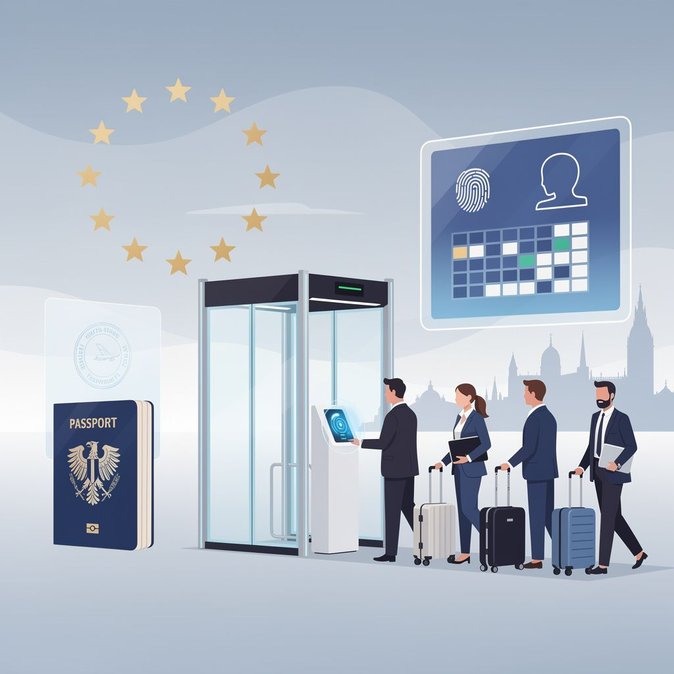
Austria’s external border posts and airports quietly crossed a historic threshold on 29 June 2026 when the EU-wide Entry/Exit System (EES) became the sole legal record of short-stay travel for non-EU nationals. Passport stamps have disappeared; instead, travellers arriving at Vienna, Salzburg or Innsbruck now pause at self-service kiosks that scan an e-chip passport, capture four fingerprints and a live facial image before a border officer grants entry. The change did not happen overnight. After an initial launch on 12 October 2025, member states—including Austria—spent six months installing hardware, training officers and stress-testing IT links with the central EU database in Strasbourg. The system went fully operational on 10 April 2026, but 29 June marked the first day on which every Austrian external crossing switched off the stamp pads and relied only on digital records, according to industry bulletin Travel & Tour World. For business travellers the implications are immediate. EES automatically totals days spent in the Schengen area, meaning accidental over-stays under the 90-in-180-day rule will trigger fines or future entry bans. Multinational employers with fly-in service technicians or sales teams must track staff travel even more precisely, as “hidden” days in neighbouring Schengen states are now visible to every officer. Immigration lawyers in Vienna report a spike in corporate enquiries about converting frequent travellers to local Red-White-Red Cards or EU Blue Cards to avoid repeated short-stay exposure. Border operations are also changing. Vienna Airport has doubled the number of e-gates and reassigned officers from stamping duty to passenger-assistance roles. Airlines are urging clients to arrive at least 45 minutes earlier until queues stabilise. Austrian police say average processing time per third-country passenger has already fallen from 87 seconds in April to 63 seconds last week, but warn of occasional resets if fingerprint sensors fail. EES is the foundation for ETIAS, the €7 pre-travel authorisation expected in late 2026. Once ETIAS goes live, carriers will be fined for boarding passengers without an approved travel code. Companies sending staff to Austria for conferences or short projects should therefore update travel approval workflows now, experts advise, to avoid frantic last-minute applications during the year-end peak.
Source: Travel and Tour World