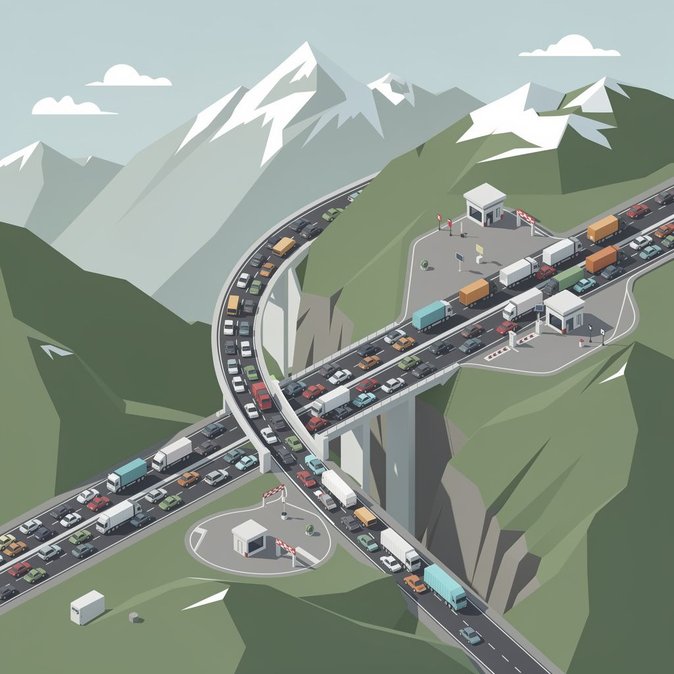
Holidaymakers heading to Italy on 29 June woke up to warnings of multi-kilometre queues on the Brennerautobahn (A 13/A 22). Real-time data collated by Reisereporter showed stop-and-go traffic stretching from Innsbruck-South to the border tunnel, with delays topping two hours at peak. Several factors converged. First, rehabilitation of the Lueg Bridge—a 1970s viaduct that engineering inspectors say must be stripped to bare concrete—has reduced carriageways to a single lane at intervals throughout 2026. Although a summer reprieve provides two lanes on most days, Monday was an exception, funnelling caravans and lorries into one narrowing corridor. Second, Austria’s internal border checks with Italy remain in place under Article 25 of the Schengen Borders Code. Spot controls, intensified after recent migration debates, required trucks to exit for document verification, compounding congestion. Tirol’s regional government defended the controls as “proportionate”, but Italian hauliers’ associations have lodged a complaint with the European Commission. For businesses the ripple effect is significant. Just-in-time auto-parts deliveries from northern Italy to Austrian plants faced penalty surcharges after drivers exceeded legal work-hour limits. Logistics specialists advise rerouting via the Tauern corridor (A 10) or scheduling departures in the early morning window before 6 a.m. when traffic density is lower. Structural relief is years away: the Brenner Base Tunnel, designed to shift freight from road to rail, is now projected for 2032 after cost overruns. Until then, transport economists expect Brenner bottlenecks to feature in every seasonal traffic forecast—a reminder that physical infrastructure and regulatory frictions can undermine Europe’s free-movement ideal even without formal border closures.
Source: Reisereporter