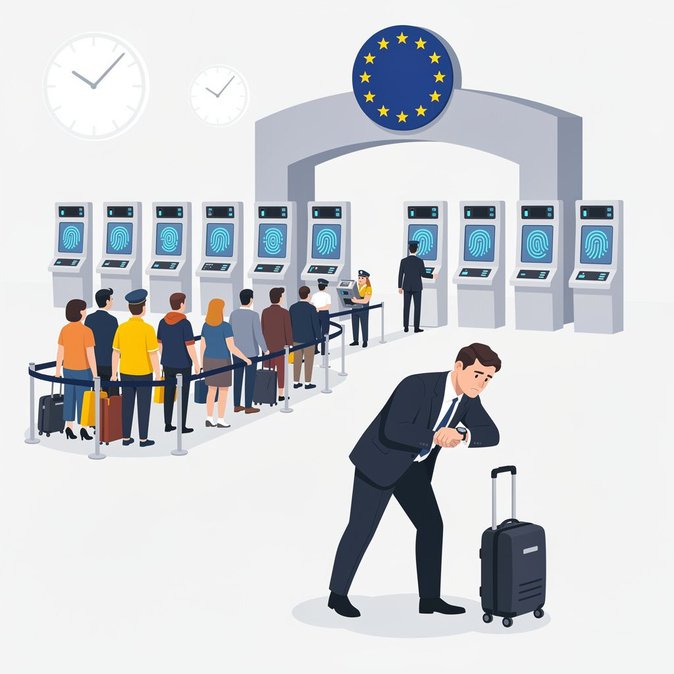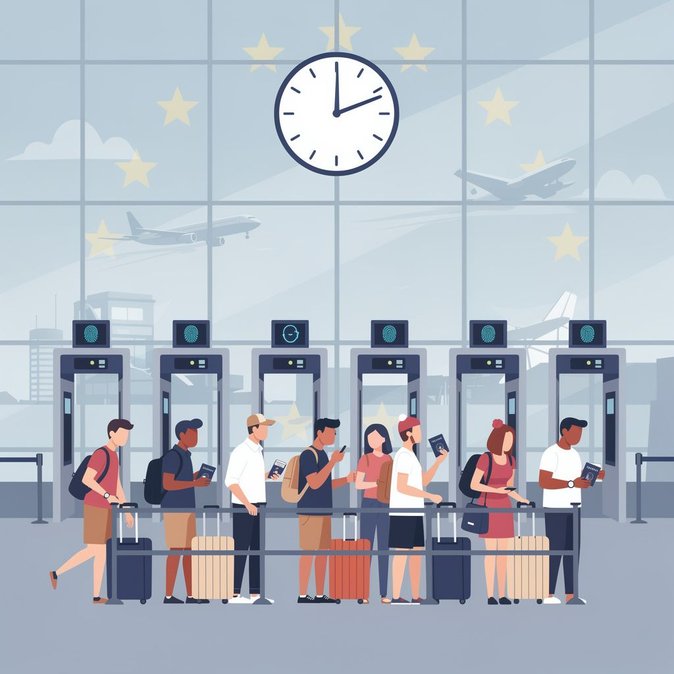
In an open letter published on 1 July and updated on 2 July 2026, Europe’s three most powerful aviation lobbies – ACI EUROPE, Airlines for Europe (A4E) and the International Air Transport Association (IATA) – warned European Commission President Ursula von der Leyen that the Entry/Exit System (EES) has reached a ‘critical point’. They claim border-control waiting times of up to five hours are already being recorded and that smaller regional airports serving holiday hotspots are running out of terminal space. Although the plea is pan-European, it has particular resonance in Belgium.
Travelers and HR teams looking for a practical workaround while the Commission and industry hash out a solution can lean on VisaHQ’s digital visa and travel-document platform. From Schengen short-stay visas to Belgium-specific work and residence permits, VisaHQ (https://www.visahq.com/belgium/) offers step-by-step application support, real-time status tracking and dedicated customer service, helping organisations minimise disruption when new border procedures like EES and ETIAS create uncertainty.
Brussels Airport expects more than five million passengers in July and August, 20 % of them non-EU nationals who must complete EES registration. The airport operator has installed 60 self-service kiosks and opened two extra departure control points, yet concedes that peak-hour queues could still top 90 minutes if biometric collection cannot be throttled back. The Commission response was cool. Officials point out that every member state signed off its readiness and that the regulation already allows temporary suspension of fingerprint capture until early September. Industry leaders counter that the exemption is discretionary, unpredictable and therefore impossible to build into airline ground-handling rosters. They want a formal ‘capacity-trigger’ mechanism so that border authorities can accelerate or decelerate EES in real time. For global mobility teams, the dispute highlights the operational risks attached to a system that will eventually feed data into ETIAS, the €20 travel-authorisation that comes into force later this year. Belgian employers hosting large induction cohorts in July–August should consider staggering arrival dates or using early-morning flights when border volumes are lighter. Assignments involving dependants may require extra buffer days to complete municipal registration once inside Belgium’s territory. Longer term, the industry’s push for an on-off switch could benefit Belgium’s service economy. A stable, predictable EES procedure would preserve the hub status of Brussels Airport and avoid reputational damage that could deter international conferences and HQ relocations. The ball is now firmly in the Commission’s court ahead of an extraordinary meeting with industry on 7 July.
Travelers and HR teams looking for a practical workaround while the Commission and industry hash out a solution can lean on VisaHQ’s digital visa and travel-document platform. From Schengen short-stay visas to Belgium-specific work and residence permits, VisaHQ (https://www.visahq.com/belgium/) offers step-by-step application support, real-time status tracking and dedicated customer service, helping organisations minimise disruption when new border procedures like EES and ETIAS create uncertainty.
Brussels Airport expects more than five million passengers in July and August, 20 % of them non-EU nationals who must complete EES registration. The airport operator has installed 60 self-service kiosks and opened two extra departure control points, yet concedes that peak-hour queues could still top 90 minutes if biometric collection cannot be throttled back. The Commission response was cool. Officials point out that every member state signed off its readiness and that the regulation already allows temporary suspension of fingerprint capture until early September. Industry leaders counter that the exemption is discretionary, unpredictable and therefore impossible to build into airline ground-handling rosters. They want a formal ‘capacity-trigger’ mechanism so that border authorities can accelerate or decelerate EES in real time. For global mobility teams, the dispute highlights the operational risks attached to a system that will eventually feed data into ETIAS, the €20 travel-authorisation that comes into force later this year. Belgian employers hosting large induction cohorts in July–August should consider staggering arrival dates or using early-morning flights when border volumes are lighter. Assignments involving dependants may require extra buffer days to complete municipal registration once inside Belgium’s territory. Longer term, the industry’s push for an on-off switch could benefit Belgium’s service economy. A stable, predictable EES procedure would preserve the hub status of Brussels Airport and avoid reputational damage that could deter international conferences and HQ relocations. The ball is now firmly in the Commission’s court ahead of an extraordinary meeting with industry on 7 July.