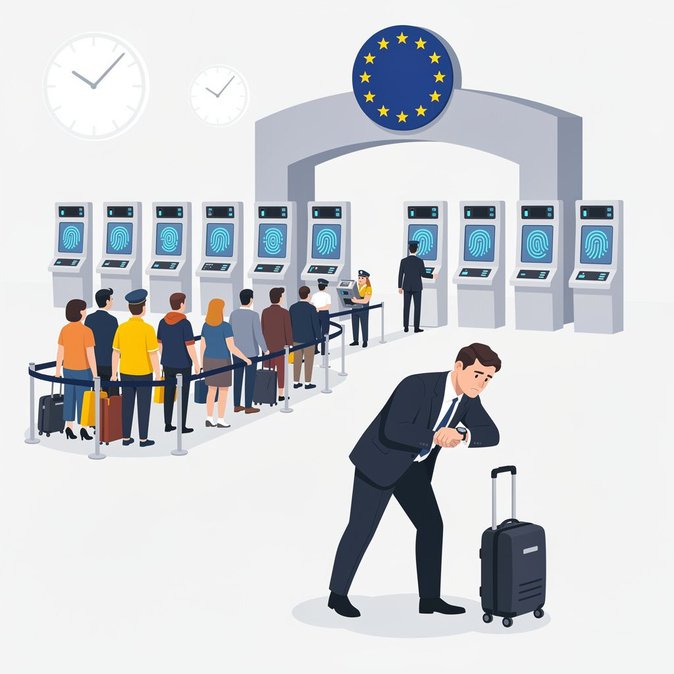
Queues snaking through the departures hall in Zaventem have become the most visible Belgian symptom of the European Union’s new Entry/Exit System (EES). Introduced on 10 April 2026, the biometric border-control platform replaces passport stamps with fingerprint and facial image capture for every non-EU traveller. While the European Commission insists the roll-out is progressing “smoothly,” the scenes at Brussels Airport this week tell a different story. Photographs published by Euronews on 2 July show holiday-makers inching forward in sweltering corridors, luggage trolleys abandoned as families wait more than an hour merely to reach an EES kiosk. Industry bodies warn that the summer exodus could turn delays into a full-blown operational crisis. Airlines for Europe (A4E), Airports Council International Europe and IATA estimate Belgian airports will handle 5 million extra passengers in July–August compared with spring; each additional 70-second biometric transaction therefore compounds staffing shortages and gate congestion. At Zaventem, the federal police have drafted officers from low-season checkpoints and the airport authority is installing 60 self-service kiosks plus two extra manual control lanes, but chief operations managers admit this will “only partially absorb” the peak-hour surge. From a business-mobility perspective the timing could hardly be worse. Corporate travel demand has rebounded to 93 % of its pre-pandemic volume on Brussels routes, according to BBTCA, and multinational firms are once again scheduling quarter-close meetings at headquarters in Flanders. Delays at the first Schengen port of entry risk employees missing rail connections to Antwerp or EU institutions in Luxembourg, inflating costs and undermining carbon-saving travel policies that rely on tight multimodal transfers. Practical advice from relocation advisers includes: allowing an extra 90 minutes between landing and onward ground transport; encouraging first-time non-EU assignees to enrol their biometrics during off-peak afternoon windows; and pre-registering data where airline API integration permits. Belgian authorities meanwhile urge patience, stressing that refusal rates have dropped by 15 % since mid-May as passengers grow familiar with the process and that the worst queues remain concentrated in 07:00-10:00 departure waves.
Source: Euronews