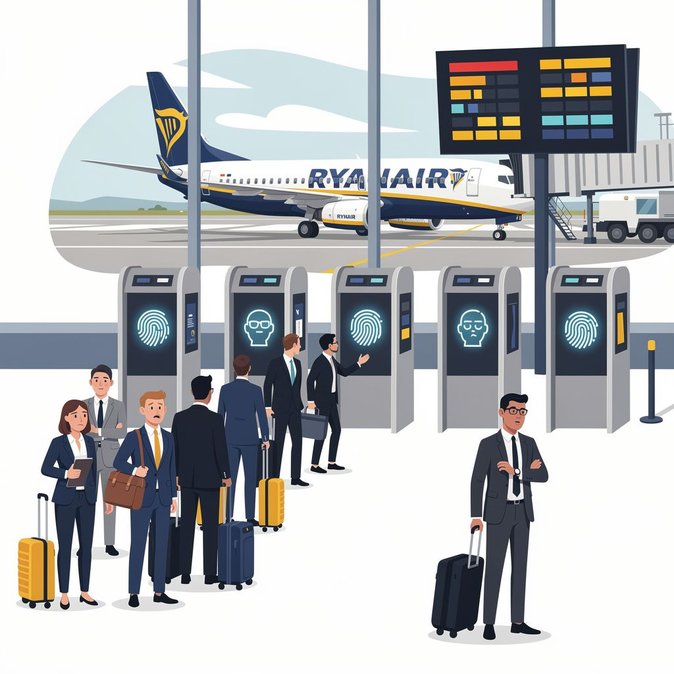
Low-cost giant Ryanair intensified its campaign against the EU’s new biometric Entry/Exit System (EES) with a statement on 3 July 2026 urging Brussels to postpone full enforcement until after the summer peak. The airline cited “capacity bottlenecks” already visible at several Mediterranean and Central-European airports and warned of “missed flights and stressed passengers”. Although Ryanair’s example airports are outside Germany, German terminals are bracing for similar congestion.
For corporate mobility teams and individual travellers seeking practical help, VisaHQ’s Germany portal offers clear, up-to-date guidance on visas, advance biometric registration and other formalities related to the EES roll-out. Its online tools and dedicated support staff can streamline document preparation before departure, minimising the risk of delays when arriving at German airports.
Berlin BER’s CEO said this week that non-EU queue times have stretched to two hours during the EES pilot phase, while Frankfurt is racing to add additional kiosks before 10 July. Airlines for Europe (A4E), of which Ryanair and Lufthansa are members, supports a temporary waiver that would allow manual processing when lines exceed agreed thresholds. Border-police unions counter that switching systems on and off would undermine security gains. Travel managers moving assignees to or via Germany should advise third-country nationals to allow extra time at immigration and to pre-register biometric data where offered. If the EU grants the requested deferral, Germany would need to amend its Federal Police operating procedures within days – a logistical challenge with large-scale summer staff leave already scheduled.
For corporate mobility teams and individual travellers seeking practical help, VisaHQ’s Germany portal offers clear, up-to-date guidance on visas, advance biometric registration and other formalities related to the EES roll-out. Its online tools and dedicated support staff can streamline document preparation before departure, minimising the risk of delays when arriving at German airports.
Berlin BER’s CEO said this week that non-EU queue times have stretched to two hours during the EES pilot phase, while Frankfurt is racing to add additional kiosks before 10 July. Airlines for Europe (A4E), of which Ryanair and Lufthansa are members, supports a temporary waiver that would allow manual processing when lines exceed agreed thresholds. Border-police unions counter that switching systems on and off would undermine security gains. Travel managers moving assignees to or via Germany should advise third-country nationals to allow extra time at immigration and to pre-register biometric data where offered. If the EU grants the requested deferral, Germany would need to amend its Federal Police operating procedures within days – a logistical challenge with large-scale summer staff leave already scheduled.