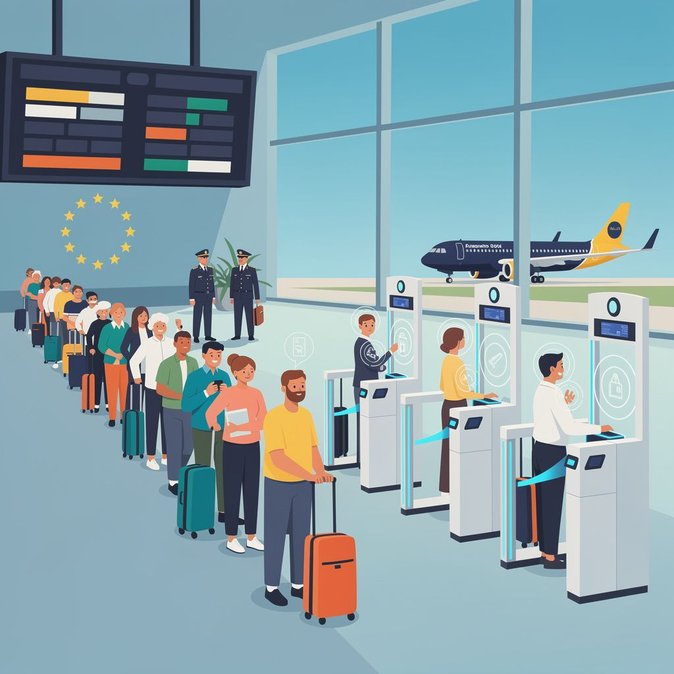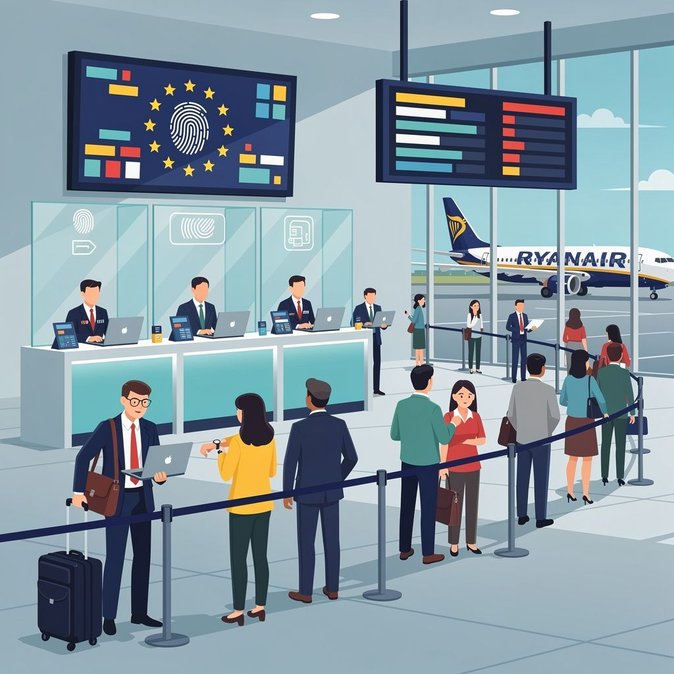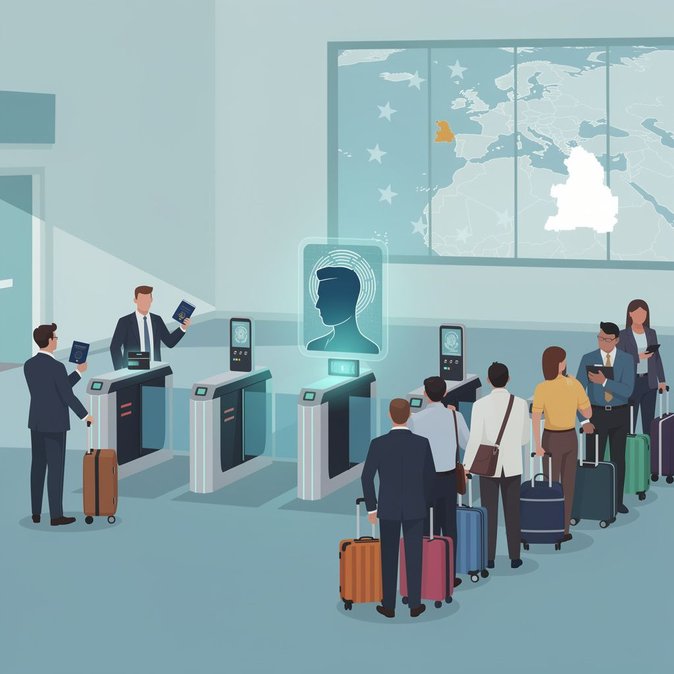
Speaking in Cork on 3 July, Ireland’s Justice Minister Jim O’Callaghan revealed that the EU’s new automated Entry/Exit System (EES) has already prevented "about 1,000 people who posed a risk" from entering the Schengen Area since it went fully live in April. The figure was relayed to Dublin by EU Home Affairs Commissioner Magnus Brunner during talks on CTA security. The EES records biometric and biographic data of every third-country national crossing an external Schengen border and automatically flags over-stayers or watch-list matches. Although Ireland is not part of Schengen, the system still matters to Irish residents and companies: every non-EU business traveller who transits from Dublin or Shannon to continental Europe must now give fingerprints and a facial image at first entry, lengthening queues at busy hubs such as Paris-CDG and Amsterdam. Airlines and airports have complained that the enrolment process can add 45-60 minutes per passenger at peak times, and industry groups warn of potential missed connections during the summer surge. For multinationals headquartered in Ireland, the operational impact is twofold. First, HR and mobility teams need to brief employees holding UK or other third-country passports about the extra time and privacy implications of EES. Second, Irish service providers with EU-wide field teams must adapt travel-scheduling software to include biometric stopovers and ensure duty-of-care compliance. Travel-management companies are advising clients to route short itineraries through Frankfurt or Madrid, where additional kiosks have eased congestion. The government is meanwhile under pressure to justify its continuing Schengen opt-out. Business lobby Ibec argues that the CTA’s visa-free link to Britain remains critical post-Brexit, but voices in the tourism sector say Ireland risks becoming a "single-country detour" if the rest of Europe adopts seamless biometric corridors while Dublin stays outside the club. A review commissioned by the Department of Justice will report in October on whether to align Irish data systems with eu-LISA to speed up CTA security checks without joining Schengen outright. Practical tip: until airlines complete their IT integrations on 8 July—when they must verify EES compliance at check-in—Irish travellers should allow at least 90 minutes extra for the first Schengen border they cross, keep confirmation of accommodation handy to answer stay-purpose questions, and download the carrier’s app to receive gate changes caused by EES processing delays.
Source: RTÉ News