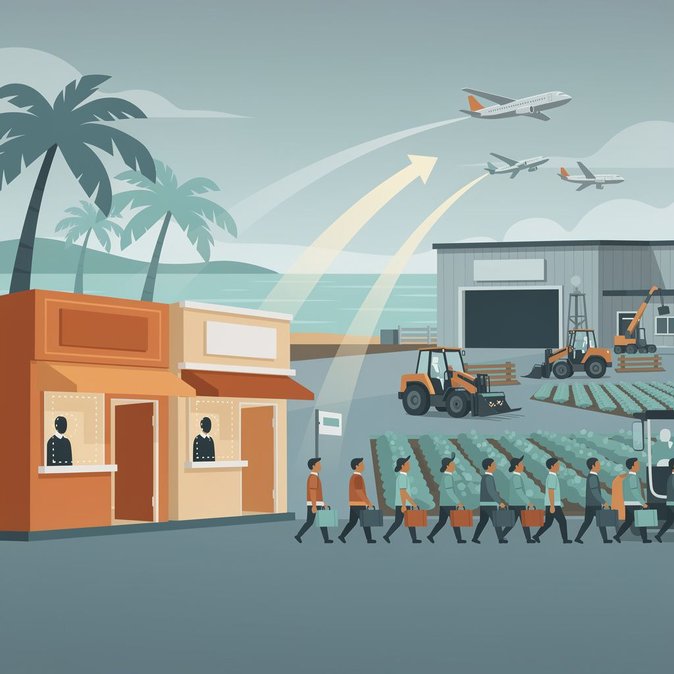
A nationwide survey released in Apia on 6 July has quantified the talent drain Pacific employers have long lamented: 47 % of the 408 Samoan businesses polled lost staff to overseas mobility schemes in the past two years, mainly Australia’s Pacific Australia Labour Mobility (PALM) programme, New Zealand’s RSE and US tuna giant StarKist. Employers told the Samoa Chamber of Commerce that skilled tradespeople were hardest hit, with 79 % of businesses providing role-specific data reporting departures of experienced carpenters, mechanics and supervisors. The departures are pushing up wages and denting productivity even as youth unemployment hovers above 13 %. The survey was funded by Canberra’s Market Development Facility, underscoring Australia’s dual role as both beneficiary and mitigator of Pacific labour flows. Australian High Commissioner Will Robinson acknowledged the "benefits and challenges" of PALM, which currently employs more than 3,100 Samoans in Australia. For Australian employers the findings are a warning shot: Pacific governments may tighten participation rules or demand stronger worker-return and skills-transfer guarantees. The report recommends vocational-training aid and business-support grants to soften the domestic impact. Mobility teams using PALM workers in meat-processing, hospitality and aged care should expect new compliance checkpoints on training, accommodation standards and repatriation planning as sending countries seek a more balanced equation.
Source: Pacific Media Network