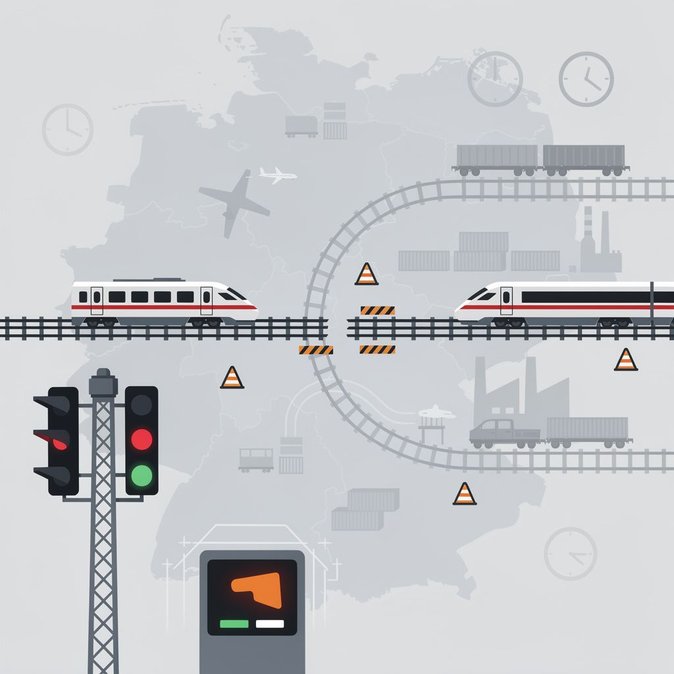
Deutsche Bahn (DB) confirmed on the evening of 7 July 2026 that the planned 10 July reopening of the Nürnberg–Regensburg corridor will be postponed. Additional safety checks on newly installed digital interlocking equipment are taking longer than forecast, meaning through-services will not resume until “no later than” the start of Bavaria’s summer holidays on 31 July. The setback comes as part of DB’s €45-billion ‘Korridorsanierung’ mega-programme, which renovates whole routes in tightly scheduled blockades rather than piecemeal overnight work. While the high-profile Hagen–Wuppertal–Köln and Hamburg–Hannover corridors remain on schedule to reopen this Friday, the Bavarian delay forces further freight diversions and prolongs bus replacement services for regional commuters. For internationally mobile staff based in southern Germany the disruption matters. Nürnberg and Regensburg act as feeders to Munich Airport and to cross-border Railjet services into Austria. Extended journey times could cause travellers to miss early long-haul departures or late-evening returns, adding accommodation costs for employers. DB InfraGO board member Gerd-Dietrich Bolte apologised for the inconvenience but stressed that “safety comes first”. The operator is updating electronic timetables, maintaining alternative freight routings to protect just-in-time supply chains for Bavaria’s automotive sector, and working with the Bavarian Rail Authority to keep substitute buses running. Global-mobility teams should advise staff to allow an extra 60–90 minutes when transiting the region until full service resumes. DB’s long-distance flex fares remain valid on diversion routes, and corporate rail cards automatically apply on replacement buses.
Source: Deutsche Bahn press release