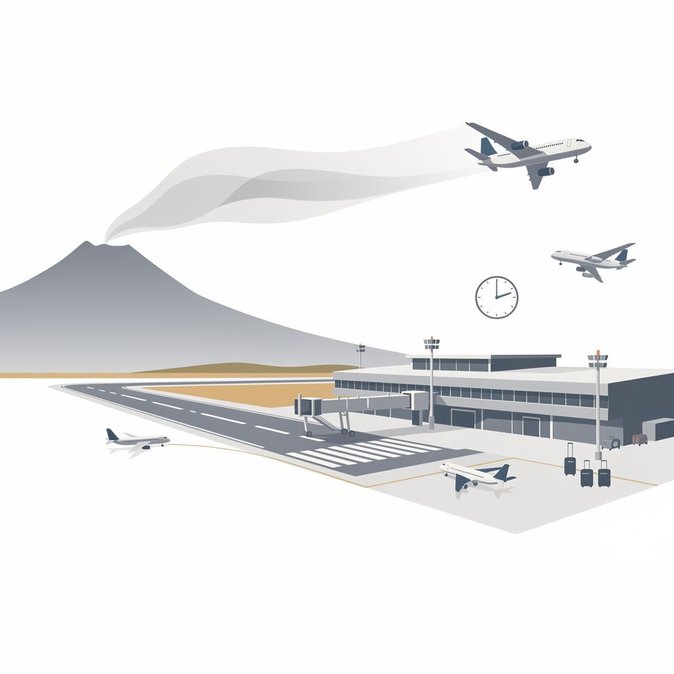
Operations at Catania-Fontanarossa, Sicily’s second-busiest airport and a critical summer leisure and cargo gateway, resumed at 11:00 CET on 7 July after an overnight ash plume from Mount Etna forced a full closure of departures and an arrivals cap. The alert level was downgraded from red to orange by Italy’s volcanology institute (INGV), allowing airport operator SAC to lift the runway ban that had been in place since the early hours. During the shutdown dozens of services on ITA Airways, Ryanair and easyJet were cancelled or diverted to Palermo and Reggio Calabria, stranding business travellers headed to the island’s petrochemical plants and semiconductor logistics sites around Catania. Freight forwarders reported time-critical semiconductor tooling shipments were re-routed by truck from Naples, adding at least eight hours to delivery windows. SAC advises passengers to check flight status before travelling because flow restrictions may persist while ground crews clear residual ash from taxiways. Airlines have activated voluntary rebooking and refund policies. Companies with time-sensitive itineraries should consider using Palermo until normal slot availability returns, expected within 24–36 hours if volcanic activity remains moderate. The incident is a reminder that Etna – Europe’s most active volcano – regularly interrupts air traffic. Mobility managers with operations in Sicily should build contingency clauses into travel policies, pre-authorise rail or ferry alternatives and keep an eye on INGV bulletins, which are also available via the airport’s API for automated alerts.
Source: La Repubblica